 Company Activities
Team Building for Logistics and Warehouse Teams: How to Get It Right
Why warehouse and logistics teams almost never get team building, and which formats really work with…
Read more
Company Activities
Few activities can mobilize an entire team, mix departments together, and generate so much laughter in so little time as a corporate gymkhana. It's a flexible format that can be adapted to a park, the streets of a city center, a fairground, or even the company's own premises, and it combines challenges of wit, skill, and teamwork in a circuit of stations. In this article, we explain exactly what a corporate gymkhana is, how to organize one step by step, and we run through several format examples that work really well, from tech-based to charity-focused, so you can choose the one that best fits your team.
A corporate gymkhana is a team building activity structured as a circuit with different stations or challenges that teams must complete in turns, usually against the clock and scoring points along the way. Each challenge poses a different test: it can be physical, a puzzle, a test of accuracy, of mental speed, or even tech-based, and it's solved best the better the group coordinates. The format is reminiscent of classic skill contests, but adapted to a corporate context, with challenges specifically designed to work on communication and collaboration between colleagues.
Unlike other, longer or more relaxed team building activities, the gymkhana is defined by its fast-paced rhythm: each challenge usually lasts just a few minutes, which forces teams to make quick decisions and avoid wasting time arguing, something that's especially entertaining to watch from the outside and very satisfying to experience from within.
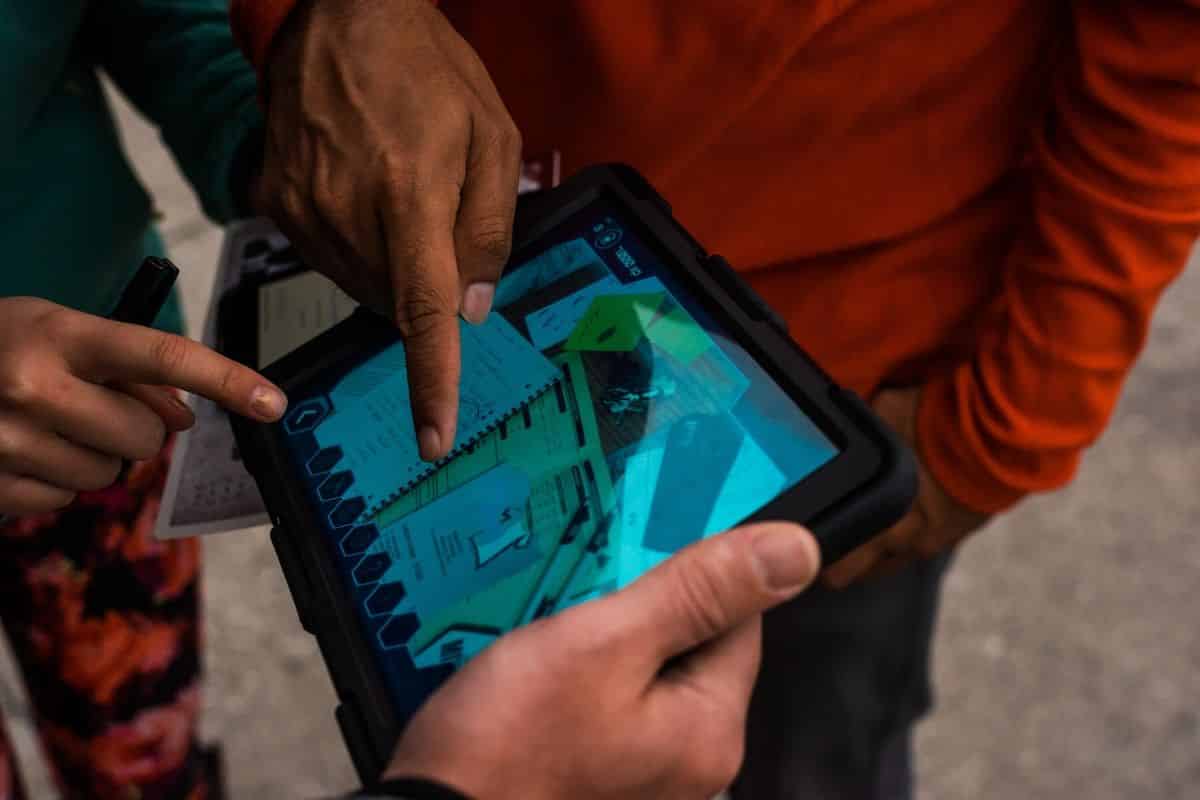
It's one of the most versatile activities out there: it can be held in a park, in the streets of a city center, in an indoor venue, or even combined with technology, such as tablets or geolocated challenges, to give the experience an even more modern touch.
This format has its roots in traditional car gymkhanas and the challenge-based games that have long been part of local festivals and summer camps, now adapted to the corporate world as a dynamic way of working as a team. Its versatility means it works just as well as a standalone activity for an afternoon as it does as the centerpiece of a multi-day convention, or as the finishing touch to a company anniversary celebration.
The gymkhana forces participants to organize themselves, split up tasks, and make quick decisions under time pressure, three skills that are also highly valuable in day-to-day work. You don't need to excel at any particular sport to enjoy it, because each challenge calls for a different kind of talent: observation, speed, creativity, accuracy, or simply a sense of humor, so almost everyone on the team finds at least one station where they feel especially comfortable. Since teams are mixed, people from departments that don't normally interact work side by side throughout the activity, which helps them get to know each other better and makes communication between areas flow more naturally once everyone is back in the office.
What's more, since it's made up of short, varied challenges, it keeps the group's interest from start to finish and avoids dead time, something especially important in events with a lot of people or with very different age profiles and interests.
Another interesting aspect of the gymkhana is that it strikes just the right balance between competition and fun: the scoreboard and points add excitement, but the real value of the activity lies in the process, in how each team organizes itself to solve the challenges, rather than in who ends up winning. That's why it works so well even with teams that aren't used to this type of activity.
Before designing the challenges, it's worth being clear about the goal: integrating new hires, celebrating the end of a project, energizing a convention with several hundred people? The group's goal and profile, including average age, fitness level, or whether there are people with reduced mobility, shape both the format and the difficulty of the challenges. It's also worth thinking about how many people will take part at once, because designing a circuit for twenty people is very different from organizing a gymkhana for a convention with several hundred attendees split into dozens of teams.
An urban gymkhana in the city center has nothing to do with an indoor gymkhana using tablets, or with a charity-focused version centered on collecting food donations. Choosing the format that fits the available space and the tone you want to give the event is one of the most important steps in the whole process, and it's worth visiting, or at least thoroughly checking, the venue in advance to spot potential limitations, such as a lack of shade, accessibility for people with reduced mobility, or the permits needed if the activity is held in a public space.
Challenges should be varied, brief, and easy to explain in just a few seconds, so no time is lost between stations. And teams, whenever possible, should be formed by mixing departments, seniority, and profiles, so the activity also serves its integration purpose.
Beyond designing the challenges, it's worth having practical aspects sorted out in advance, such as the materials needed at each station, the number of facilitators required to run the circuit without long waiting times, the scoring system and how the rankings will be communicated in real time, and a backup plan in case a challenge planned for outdoors needs to move indoors.
The mini Olympics are probably the most classic sports gymkhana format, and it always works: a circuit of physical and skill challenges with plenty of healthy competitive spirit. If you prefer a more tech-driven approach, a tablet-based gymkhana like cluetivity combines puzzle-solving, geolocation, and digital clues to explore an urban space or a venue while solving mysteries as teams.
For companies that want to give their activity a charitable component, there are formats like mission kilo, a gymkhana in which completed challenges translate into food or donations for a social cause, combining fun with corporate responsibility. And if the goal is to raise the team's awareness about sustainability, an eco gymkhana features challenges related to recycling and environmental care without losing the format's competitive spirit.
These examples aren't mutually exclusive: many companies combine several challenges from different formats within the same gymkhana, mixing physical, puzzle-based, tech, and even charity stations into a single circuit, so each station brings a different type of challenge and the whole thing feels much more varied and entertaining for the team. For very large conventions, with several hundred participants split into dozens of teams, it's common to run multiple parallel circuits, so all teams can compete at the same time without queues or waiting times. This is one of the situations where an experienced organizing team really makes a difference, something we've handled on numerous occasions across more than 500 events for companies throughout Spain.
It's also one of the activities that works best for integrating new hires or welcoming teams that have just merged following a restructuring, precisely because it forces collaboration from the very first minute without the need for a prior formal introduction.
Our experience organizing gymkhanas for companies of very different sizes and sectors has taught us that some details make more of a difference than others when it comes to getting the activity just right:
Finally, don't underestimate the power of photos and video during the activity: having someone dedicated to capturing the gymkhana's best moments makes it possible to share them afterward with the whole team, including people who couldn't attend, and extends the good memory of the day well beyond the event itself.
With more than 15 years of experience and more than 500 companies that have already trusted our gymkhanas, at Kaizen we know how to adapt every challenge circuit to your team's profile, space, and goals. We offer more than 50 different activity formats, many of which can be adapted into a gymkhana, so we're sure to find the perfect combination of challenges for your next event. If you'd like our help designing it, get in touch with our team and we'll put together a no-obligation proposal for you.
We design the activity around your company and send a no-obligation quote within 24 hours. Here are some of the most popular:
Company Activities
Why warehouse and logistics teams almost never get team building, and which formats really work with…
Read more Company Activities
Why healthcare staff need team building that fits around their shifts, and how to design inclusive, …
Read more Company Activities
Incentives and team building are not the same thing: one rewards individual results, the other stren…
Read more