 Company Activities
Team Building for Logistics and Warehouse Teams: How to Get It Right
Why warehouse and logistics teams almost never get team building, and which formats really work with…
Read more
Company Activities
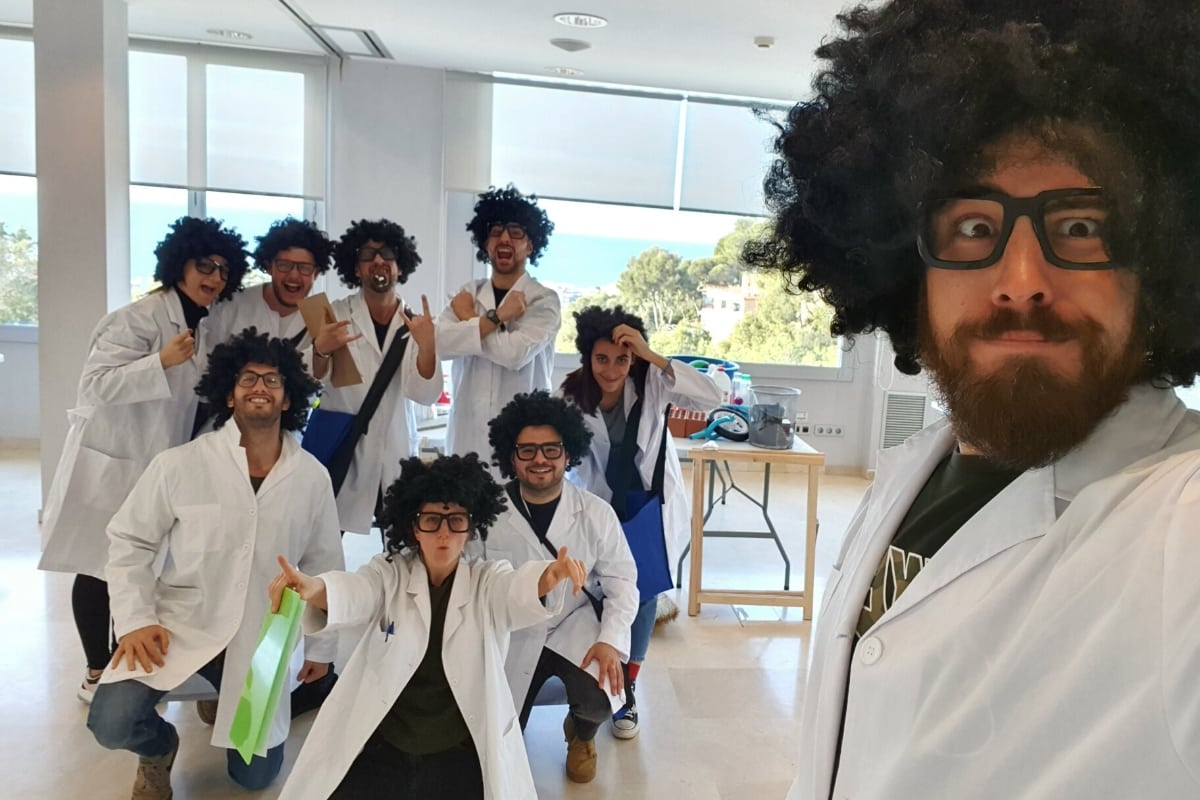
An icebreaker is a short activity, designed for the first few minutes of an event, with a single goal: to break the initial tension, get the group energised and create a receptive atmosphere before getting into the substance of the event. It's easy to assume these activities are just filler before the important stuff, but in reality they shape how the rest of the event plays out: a convention, an annual meeting or a training day that starts cold, with a quiet, scattered audience, is much harder to lift afterwards.
The most common mistake is skipping this phase altogether, or reducing it to a simple round of introductions that no one remembers ten minutes later. A good icebreaker doesn't need much time, five to twenty minutes is usually enough, but it does need to be well suited to the context, the size of the group and the goal of the event.
Not every short activity works equally well in any context. Before choosing one, it's worth checking that it meets a few basic conditions:
When an activity meets these conditions, almost any group responds well, regardless of age, seniority or company culture.
For internal meetings or training days, the icebreaker's job is to sharpen attention without eating too much into the agenda. Short, quick-question activities work well here, where each person answers a light question related to the day's topic in a single sentence, as do small group attention challenges that wrap up in a couple of minutes. The key is making the transition into the serious content feel natural, not like an abrupt cut.
If the day includes a longer training component, it can make sense to run a more substantial icebreaker, such as a short version of a training-focused team building activity, which combines an initial warm-up with content that's picked back up later in the session.
When the group is large, an annual convention, a company kick-off, an event with several hundred people, the challenge shifts: it's not just about breaking the ice between strangers, but about generating a sense of collective energy from the very first minute, something that signals the event has truly begun.
A surprise flashmob at the start of a convention is a very effective tool for large groups: it creates surprise, spreads energy and leaves a memorable image that also works well on social media or in the event's highlight video. A musical bingo opener can also energise an entire auditorium in a simple way, with no one needing to step onto the stage.
For events where the audience has already been sitting for hours, after a meal, following a long run of talks, a brief laughter therapy session can work as a reset for the group: it lowers formality, raises energy and gets the audience ready for the next part of the programme in a better frame of mind.
Some events, trade fairs, industry days, gatherings between different companies, bring together attendees who mostly don't know one another beforehand. In these cases, the icebreaker has an extra role: making that first contact happen between people who would otherwise take much longer to break the ice on their own.
The activities that work best here are ones that force interaction with several different people in a short space of time, with a light excuse: finding something in common, completing a small joint mission, solving a simple challenge in rotating pairs. The point isn't the activity itself, but the conversations it sparks around it.
When part of the team attends in person and another connects remotely, the icebreaker has to solve an extra problem: making sure the people behind a screen don't become passive spectators of what's happening in the room. Activities that can be followed and answered the same way from a computer as from the room work best here, quick questions with answers visible to everyone, or small recognition challenges where every person, wherever they are, has an equal chance to take part.
In these mixed formats, it's best to avoid any icebreaker that depends on moving around the room or on direct physical contact, since that automatically excludes remote participants. Explicitly naming the people joining online and giving them the floor from the very first minute goes a long way toward making sure they don't feel like a separate group for the rest of the event.
There are a number of mistakes that come up again and again when planning this part of an event:
There's no universal duration that works for every event, but there is a useful rule of thumb for deciding: an icebreaker should last exactly as long as it needs to do its job, and not a minute more. For a one-hour team meeting, three to five minutes is usually enough. For a full-day convention, it can make sense to spend fifteen to thirty minutes on it, especially if it combines breaking the ice with symbolically marking the start of the event.
A good sign that the length is right is to watch the group as it happens: if energy keeps rising, there's room to stretch it a few more minutes; as soon as impatience starts to show or eyes drift to the clock, it's time to wrap up and move to the next item on the agenda.
A corporate event often brings together people from different departments, ages and personalities: technical profiles alongside sales profiles, long-serving staff alongside recent hires. A good icebreaker doesn't require everyone to share the same outgoing personality, it offers several ways to take part: someone can contribute by speaking up, another person can contribute by moving physically through the space, and a third can limit their participation to writing or pointing at an option, without that leaving them out of the collective result.
Designing the activity with this range of profiles in mind, rather than assuming everyone equally enjoys being the centre of attention, is what makes the difference between an icebreaker that brings the whole group together and one that only works for part of it.
Not every event needs the same kind of opener. In very short meetings, with a tight agenda and a group that already works together daily, forcing this kind of activity can feel artificial or even undercut the seriousness of the rest of the session. In these cases, a more low-key opener can be enough: a quick open question, an interesting fact related to the day's topic, or simply a few minutes of informal conversation before starting.
The key is matching the icebreaker's tone to the event's tone: a festive convention can carry bigger, more visible activities; a serious working meeting calls for something more discreet and brief.
It also makes no sense to force an icebreaker when the event's own content already does that warm-up job on its own, for example when the programme opens directly with a longer participatory activity. In those cases, adding a separate icebreaker beforehand can unnecessarily stretch out the start instead of adding value.
Before deciding, it's worth answering three questions: how much real time can be devoted to this opening phase, how many people will take part, and what tone does the rest of the event have. With those three answers, the list of options naturally narrows down to a handful of genuinely suitable activities, instead of picking at random from dozens of generic proposals.
If you need help choosing the right icebreaker for your next corporate event, our FAQ page answers the most common questions about formats, duration and capacity, and at Kaizen Team Building we can suggest specific options tailored to your event through our contact form.
We design the activity around your company and send a no-obligation quote within 24 hours. Here are some of the most popular:
Company Activities
Why warehouse and logistics teams almost never get team building, and which formats really work with…
Read more Company Activities
Why healthcare staff need team building that fits around their shifts, and how to design inclusive, …
Read more Company Activities
Incentives and team building are not the same thing: one rewards individual results, the other stren…
Read more