 Team Building
Autumn team building: back-to-school activities for your company
September and October are the ideal time to reconnect your team. Here is why autumn is the best seas…
Read more
Team Building
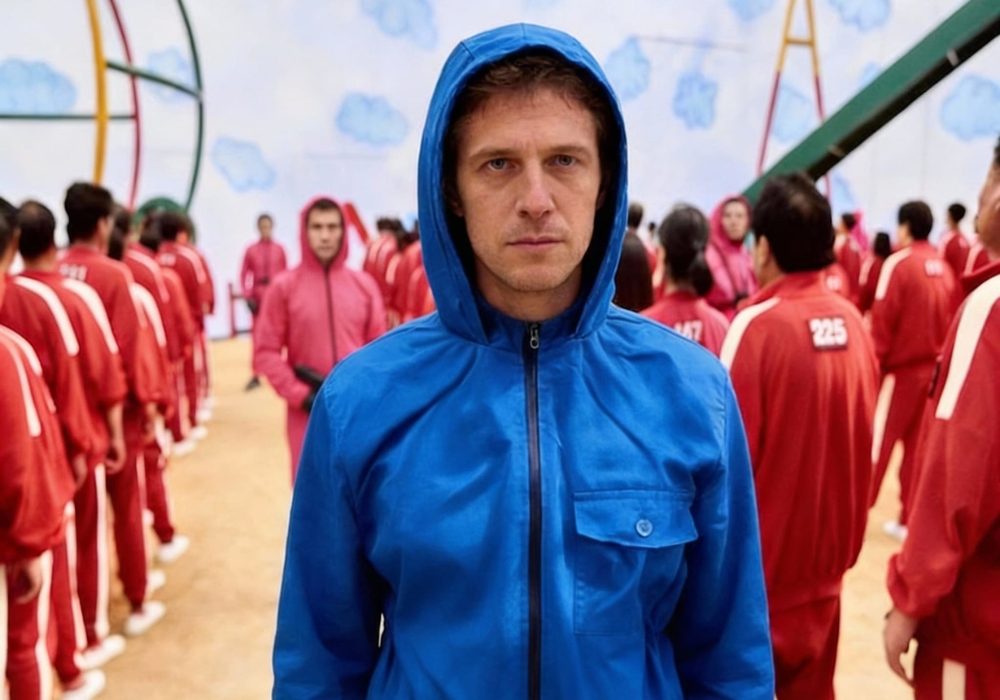
There's a world of difference between asking a team to solve five unrelated challenges and telling that same team they're part of a mission with a goal, an adversary, and an ending that depends on their decisions. The content can be almost identical — the same challenges, the same time, the same group of people —, but the experience the team lives through changes completely. That difference is, in essence, what gamification and storytelling bring to team building: they turn a series of exercises into a story with meaning, and that story is what the brain remembers long after the activity is over.
Gamification isn't just about tacking a scoreboard or a final prize onto an activity. It's about borrowing the mechanics that make games addictive — clear goals, visible progress, rewards, increasing levels of difficulty, a degree of uncertainty about the outcome — and applying them to a team activity with a corporate purpose behind it. A good gamification system gives participants a constant sense of moving toward something, and that sense of progress is one of the most powerful psychological drivers there is for holding a group's attention and motivation for hours at a time.
Activities like Defuse the Bomb or the corporate Cluedo are clear examples of gamification done well: they introduce a recognizable game mechanic — the race against the clock, the mystery to solve — that the team grasps almost instinctively, with no need for lengthy explanations beforehand. That familiarity with the mechanic is key: the less time spent explaining the rules, the more time is left for the team to actually live the experience.
The human brain is wired to remember stories, not lists of loose facts. If a team is told "now you're going to do five brain-teasers," the experience gets filed away in memory as just another task. If instead they're told "your team has been recruited for a mission and you need to solve these five challenges before time runs out," the exact same content becomes a narrative that the brain processes and remembers in a completely different way. Storytelling doesn't change what's being done — it changes the mental frame through which it's experienced.
A good narrative also gives meaning to elements that, without context, might seem arbitrary. If a challenge involves cracking a code, that challenge carries far more emotional weight if the team knows that code is the key to defusing something or unmasking a culprit, than if they're simply told "solve this puzzle" with no further explanation. Narrative context turns each individual challenge into a piece of a bigger puzzle, which multiplies the group's interest in solving it.
Some activities are built precisely around a strong narrative, where the story isn't decoration but the engine driving the whole experience:
In every one of these cases, the key isn't how complex the story is — there's no need for a sophisticated script —, but how coherent it is: every element of the activity, from the facilitators' costumes to the way the space is styled, reinforces the same narrative instead of contradicting it.
The most common mistake when trying to apply these two elements is overloading the activity with too many layers: a story that's too complex, scoring rules that are hard to follow, or a setting so elaborate it distracts from the challenge itself. Gamification and storytelling work best when they're simple to grasp within the first few minutes, letting the experience itself — not the upfront explanation — create the immersive effect.
A good rule of thumb is that any participant, with no previous experience of this kind of activity, should be able to understand the game's goal and the thread of the story in under two minutes of explanation. If it takes longer than that for the group to grasp what's going on, the narrative or the scoring system is probably too complicated for a corporate event format, where time is always limited.
One element that's often overlooked is the facilitator's own role within the narrative. When the facilitator simply explains the rules from outside the story, the immersion keeps breaking. When the facilitator steps into character — the master of ceremonies, the mission's narrator, the mystery's suspect —, the experience gains an extra layer of credibility that's very hard to achieve any other way. Formats like Hollywood, where the team itself becomes the star of an audiovisual production, push this logic to the extreme: the narrative doesn't just wrap around the activity, it turns every participant into an active part of the story being told.
Beyond how fun the experience is in the moment, well-applied gamification and storytelling have an effect that lasts well beyond the day itself. A shared story becomes a common reference point within the team: months later, someone can mention "that mission where we had to defuse the bomb in the last minute" and the whole group instantly gets the reference. In practice, these kinds of shared anecdotes are one of the building blocks of a team's internal culture — far more effective than any corporate message repeated in a meeting.
Not every narrative works equally well in every corporate context. A story with a light, humorous tone fits perfectly with a young team mainly looking to have fun, but it can feel out of place at an event whose main goal is conveying seriousness around a major organizational change. In the same way, a narrative built around perseverance and collective effort makes far more sense when the team is going through a demanding period and needs to reinforce the sense that they can face challenges together, while a purely festive story fits better when the goal is simply celebrating a good result with no extra layer of meaning attached.
The narrative doesn't live in the facilitator's words alone: the space where the activity takes place strengthens or weakens the sense of immersion. A completely neutral room, with no visual element supporting the story, forces the group to imagine far more than they should have to. Small staging details — different lighting, a prop or two, music that matches the tone of the narrative — make it much easier for the team to step into the story, with no need for an expensive production. The coherence between what's told and what's seen is, in most cases, far more decisive than how complex the script itself is.
If you want to explore which gamification or storytelling format best suits your team, you can browse the full activity catalogue or get in touch directly with the Kaizen team to design a narrative experience tailored to your company, your budget and the message you want your team to walk away with.
We design the activity around your company and send a no-obligation quote within 24 hours. Here are some of the most popular:
Team Building
September and October are the ideal time to reconnect your team. Here is why autumn is the best seas…
Read more Team Building
Team building in nature encourages a real digital detox and reduces team stress, thanks to a wide ra…
Read more Team Building
How to design sustainable team building by cutting waste and travel, with activities that build in a…
Read more