 Leadership Management
Team building and occupational health and safety: cohesion as a boost to your safety culture
How trust and communication between colleagues, built through team building, strengthen your risk pr…
Read more
Leadership Management
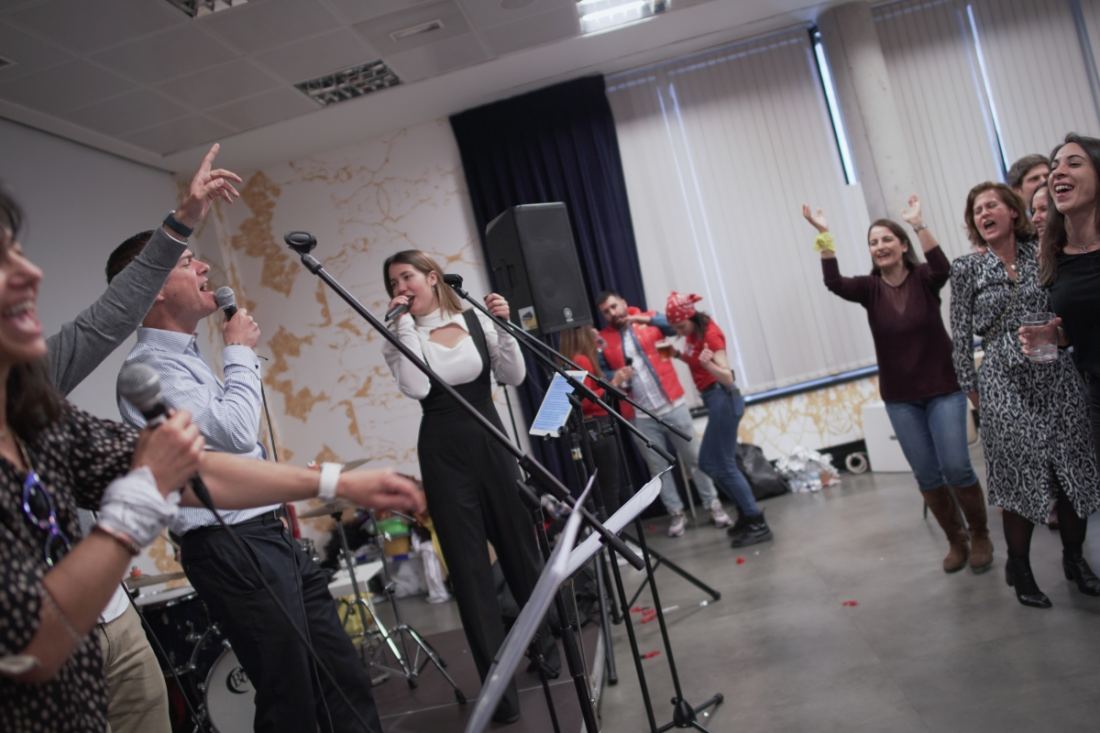
One of the most common problems with traditional team building is that it's treated as an isolated event: a day is organized, the team enjoys it, everyone heads back to the office feeling good, and within days the routine absorbs whatever positive effect the activity may have had. This pattern of one-off action with no follow-through is why many companies end up seeing team building as a nice-to-have expense rather than a genuine investment in the organization's culture.
The real value of team building shows up once it stops being an isolated occasion and becomes part of how the company understands teamwork, communication and recognition. It's not about running activities constantly, but about carrying the principles worked on during those days — trust, open communication, collaboration across areas — through into everyday work as well.
A single team building day a year, however well executed, can hardly sustain a culture of collaboration on its own for the other three hundred and sixty-four days. The effect of any activity tends to fade over time if nothing reinforces it, and teams gradually slip back into their usual communication patterns, especially if those patterns were shaped by silos between departments or by a mostly top-down style of communication.
This doesn't mean multiplying the number of events, which can actually backfire if it starts to feel like just another obligation on an already packed calendar. The key is combining occasional higher-intensity moments, like a full team building day, with small, sustained habits that keep the collaborative mindset alive between those moments.
Instead of putting all the effort into a single annual event, many companies get better results by spacing out shorter activities across the year: a couple-hour activity in spring, something more elaborate before summer, and a festive close at Christmas, for example. This approach keeps the team's interest steady, so no single moment of the year becomes the only chance to reinforce cohesion.
For team building to truly become part of the company culture, it has to reflect the values the organization claims to stand for. If a company describes itself as innovative, it makes sense for its activities to include creative challenges; if it focuses on sustainability, activities with an environmental angle reinforce that message consistently. When the activity and the company's messaging point in different directions, the team notices immediately, and the effect can even become counterproductive.
What happens in the days after a team building activity matters just as much as the activity itself. Sharing photos internally, mentioning something that came up on the day in a meeting, or simply letting jokes and shared references keep circulating naturally, all help the effect last well beyond the event itself.
A company's culture isn't built solely through values documents posted on the intranet, but through observable behaviours repeated over time, and team building is one of the most visible tools for showing, in practice, what kind of behaviour the organization actually values.
No team building strategy holds up if leadership doesn't back it consistently in day-to-day work. If middle managers and senior leadership preach collaboration during a team building day but then go back to a rigid or opaque management style, the team notices the contradiction clearly and the effort loses credibility. Building team building into the culture also means leaders taking an active part in the activities, not just as organizers, but as team members like everyone else.
Not every activity serves the same purpose within an ongoing strategy. Some companies find training-based team building especially useful, combining group dynamics with professional development content, ideal for building continuous learning into the culture of collaboration. Others turn to methodologies like Lego Serious Play to work regularly on communication and problem-solving as a team, particularly during periods of organizational change or goal-setting.
There are indicators that show when a company has genuinely built team building into its culture, beyond just running one-off events. One is when the team itself starts suggesting ideas for the next activity, a sign that the experience is seen as something of their own rather than something imposed from above. Another is when the collaborative behaviours practised during the activities — asking for help openly, celebrating other teams' achievements, communicating transparently about mistakes — start showing up spontaneously in everyday work, without anyone needing to point them out.
It's also a good sign when new hires sense from the start that collaboration and closeness between teams are simply part of how the company works, rather than something they stumble upon by surprise a few months in. When team building is well embedded in the culture, it becomes a natural extension of the way people work, not a break from it.
One of the most common mistakes is leaving the responsibility for team building entirely to the HR department, without the rest of the organization — and especially leadership — getting actively involved. When team building is seen as an initiative belonging to a single department, it's much harder for it to translate into a real cultural shift, no matter how well the individual activities are designed.
Another common mistake is failing to adapt the strategy as the company grows or changes. What works well with a twenty-person team may not work the same way once the workforce multiplies, or once hybrid or remote work becomes part of everyday life. Keeping a team building culture alive means periodically reviewing the format and adapting it to the organization's current reality, rather than always repeating the same formula out of habit.
If senior leadership sets the overall tone of the culture, it's middle managers who sustain it in day-to-day work, since they're the ones handling most everyday interactions within each team. A team lead who celebrates small acts of collaboration between colleagues, who encourages people to ask for help without fear of looking incompetent, or who openly acknowledges when an achievement was the result of teamwork rather than one person's effort, is reinforcing exactly the same principles worked on during a team building activity — just continuously rather than occasionally.
Training these middle managers to understand their role in sustaining a culture of collaboration, beyond organizing or attending formal activities, tends to be one of the factors that most sets apart companies where team building genuinely takes hold in day-to-day life from those where it stays a nice one-off memory with no real follow-through.
At Kaizen Team Building we help companies design not just one-off activities, but team building strategies sustained over time, aligned with each organization's culture and values. Browse our full catalogue at team building, find answers to common questions in our FAQ section, or talk to our team to plan an annual strategy tailored to your company together.
We design the activity around your company and send a no-obligation quote within 24 hours. Here are some of the most popular:
Leadership Management
How trust and communication between colleagues, built through team building, strengthen your risk pr…
Read more Leadership Management
Team building as an employer branding tool: authentic content for social media and recruitment, and …
Read more Leadership Management
Absenteeism is closely linked to a sense of belonging. Find out how team building can help strengthe…
Read more