 Leadership Management
Team building and occupational health and safety: cohesion as a boost to your safety culture
How trust and communication between colleagues, built through team building, strengthen your risk pr…
Read more
Leadership Management
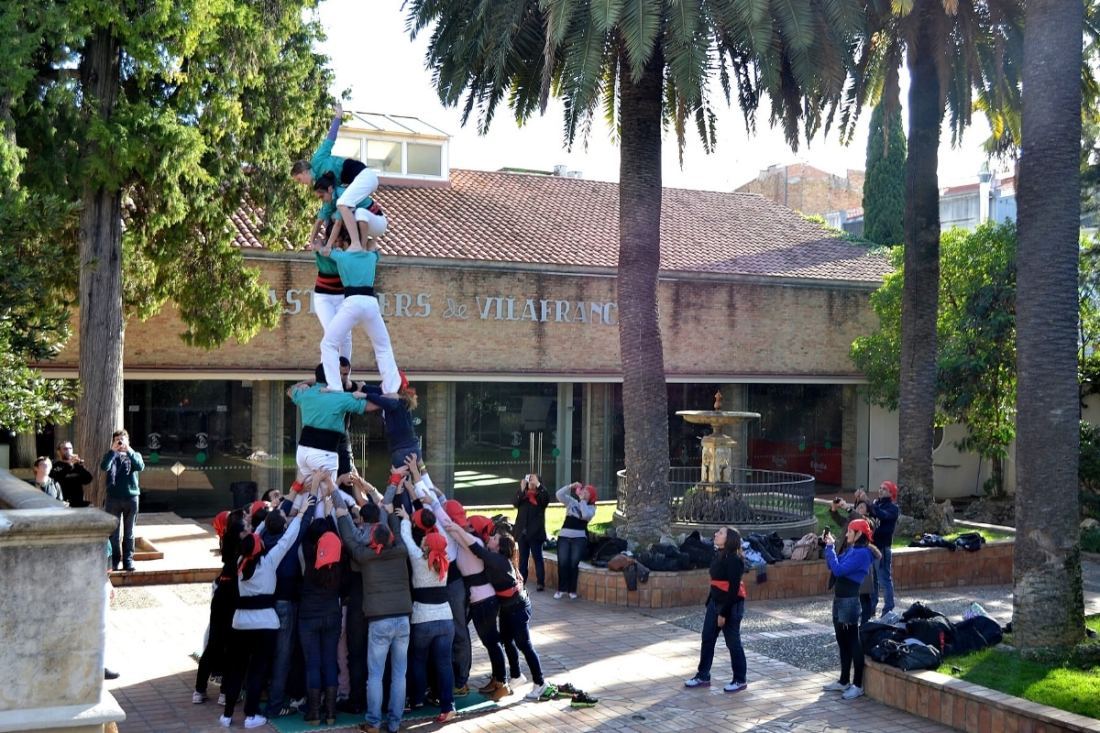
When people talk about employer branding, the conversation tends to drift quickly towards corporate videos with tightly scripted dialogue, testimonials recorded in a studio and LinkedIn posts that smell more of the marketing department than of real life at the company. And yet some of the best employer branding material a company can produce does not come from a meticulously planned audiovisual production, but from something much simpler: a good team building activity, genuinely experienced by the team and told just as it happened.
This article looks at why team building fits so naturally into an employer branding strategy, how to turn those days into useful content for attracting talent and, above all, why its effect does not stop at the recruitment stage but keeps working once the person has joined the team.
Employer branding is, in essence, a company's reputation as a place to work: what is said about it, what it projects outwards and, above all, what its current people say when someone asks them what it is like to work there. Unlike a brand campaign aimed at customers, the target audience here is potential candidates, and the most credible message is not the one written by the communications department but the one conveyed, more or less spontaneously, by the team members themselves.
This is where team building has an advantage that few other HR initiatives can match: it creates real moments, with genuine energy, that can be shared without forcing anything. A photo of a team laughing during an activity, a short video of a group competing in good spirits or an off-the-cuff comment from someone about how much fun they had say far more about a company's culture than any statement of corporate values written from the top down.
One of the most direct applications of team building within employer branding is simply content creation. You do not need to hire a production company or organise a film shoot: it is enough to bear in mind, before the activity, that the day is also generating material that can later have a second life on social media, on the company's careers page or in the recruitment process itself.
A team building day naturally tends to produce three kinds of very valuable content: candid images of the group in the middle of the activity, short videos capturing moments of energy or camaraderie between colleagues, and passing remarks that people make in the heat of the moment and that, if well captured, work better than any prepared slogan. Publishing this kind of content on the company's channels, tagging the team that took part and without over-producing it, usually generates more engagement and more credibility than standard corporate content, precisely because it does not look like advertising.
Any candidate researching a company before a selection process will sooner or later come across its social media presence and the reviews left by former and current employees. In that context, showing real images of team activities serves a very specific purpose: it turns an abstract claim such as “we look after our people” into visible, verifiable proof. There is no need to explain that the atmosphere is good if you can simply show a team enjoying themselves together at a recent activity.
It would be a mistake to see team building purely as an outward-facing marketing tool. Its most important effect actually happens inwards: in how the team already working at the company feels. The strongest employer branding is not the kind built on social media, but the kind that comes from the people already working in the organisation speaking well of it and wanting to share that day on their own personal profiles, without anyone asking them to.
A team that enjoys quality shared experiences with some regularity (not just a compulsory annual conference, but days genuinely designed for enjoyment and connection) tends to feel a stronger sense of belonging to the organisation. And that sense of belonging is one of the factors that weighs most when someone decides whether to stay with a company when another offer comes along, or to recommend an acquaintance for a vacancy on their team. In that sense, every well-planned team building action works in two directions at once: outwards, as a shop window for future candidates, and inwards, as reinforcement of the employer brand among those already on board.
Not all activities generate the same kind of content or the same visual energy. For an employer branding strategy, it is worth prioritising eye-catching formats, such as a surprise flashmob or a Hollywood-style setting with a photocall, with clear group moments and a creative or competitive element that makes candid photos and videos easy to capture:
Whichever format you choose, what really makes the difference is letting the activity unfold naturally: the best employer branding content almost never comes from forced poses in front of a camera, but from capturing, almost in passing, the moments when the team is simply enjoying itself without thinking about being filmed. That is why whoever takes the photos or videos should move around discreetly during the activity, rather than constantly interrupting to ask for poses or retakes: the less the camera is noticed, the more natural the material looks afterwards and the closer it is to what really happened that afternoon.
A common mistake is to choose the activity thinking only about what will look best in a photo, without considering whether it fits the team's real culture. A company with a more sober, technical tone may feel better represented by a creative or culinary workshop than by a flashmob with choreography, while a young, highly dynamic team may enjoy a more playful, competitive format. Employer branding content works best when candidates, on seeing it, recognise the kind of atmosphere they will actually find if they join, rather than an idealised version that has nothing to do with the company's usual culture.
You do not need a large marketing department to make the most of this. By designating one person on the team to take photos and short videos during the activity, with no need for professional equipment, and by applying a little judgement when selecting the best material afterwards, any company can generate several weeks of content from a single team building day. It is also worth asking beforehand who is comfortable appearing in photos or videos published on the company's channels, to respect the privacy of anyone who would rather not appear.
If the company has teams in different locations, taking advantage of local activities makes both the logistics and the creation of varied content easier: organising an activity near each site, rather than concentrating everything at head office, lets each team create its own content and feel equally represented in the company's communications, something that candidates in those same cities tend to value especially, as it shows that the company's culture is not lived at just one site.
It is also worth thinking about the calendar with some perspective: spreading two or three smaller activities across the year, rather than concentrating all the effort on a single annual event, gives you more opportunities to generate varied content and keeps the company's social media presence steady, instead of a one-off spike that is forgotten a few days after it is published.
It is worth closing with an honest warning. Employer branding only works if it is consistent with the reality of the company. Publishing photos of a great team building day while the team's everyday experience is one of careless treatment or poor working conditions has the opposite effect to the one intended: it breeds mistrust among candidates and, above all, among the team itself, who see the contradiction between what is shown to the outside world and what is lived behind closed doors.
Team building works as an employer branding tool when it reflects something real, not when it is a cover to make up for something that is not. If your company already looks after its team and wants that to show on the outside too, our team can help you design an activity with real content potential. You can also see the full catalogue in our team building section to find the format that best suits your company's culture.
We design the activity around your company and send a no-obligation quote within 24 hours. Here are some of the most popular:
Leadership Management
How trust and communication between colleagues, built through team building, strengthen your risk pr…
Read more Leadership Management
Absenteeism is closely linked to a sense of belonging. Find out how team building can help strengthe…
Read more Leadership Management
Team building for sales teams helps manage pressure, rejection and competitiveness, strengthening co…
Read more