 Leadership Management
Team building and occupational health and safety: cohesion as a boost to your safety culture
How trust and communication between colleagues, built through team building, strengthen your risk pr…
Read more
Leadership Management
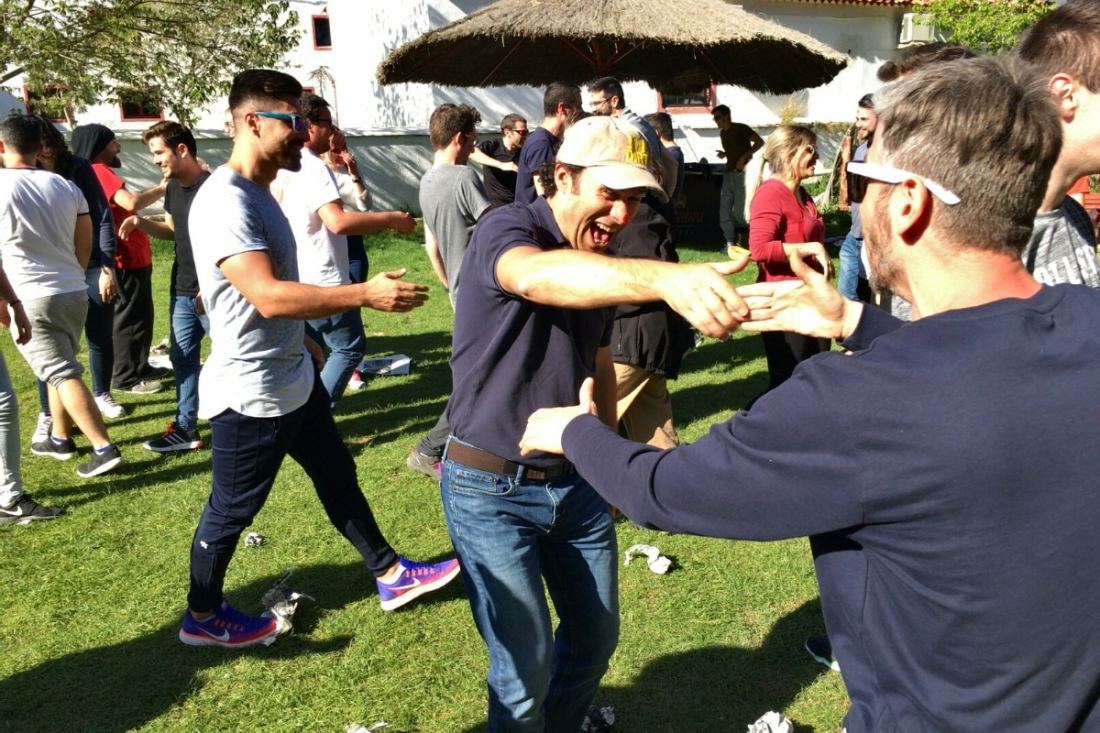
Absenteeism is one of the indicators that most worries HR managers, and also one of the hardest to tackle, because it rarely has a single cause. Behind repeated sick leave, frequent lateness or an unjustified absence there may be personal or health reasons, or something much more closely tied to the organisation itself: a lack of connection with the team, a feeling of not mattering much, or the wear and tear of working without feeling part of something. Team building is not a magic cure for absenteeism, but it is an honest tool that works on one of its most real causes: the sense of belonging.
When people feel part of a team, when they know their colleagues beyond the purely functional relationship and feel their absence would have a real impact on the group, their relationship with work changes. Team building does not remove the health reasons or personal circumstances that lead someone to miss work. What it does is strengthen a bond that, in practice, makes people want to be present when they can be, and not merely because they have a contractual obligation to be.
Before absenteeism becomes a visible problem, there is usually a prior process of wear and tear that is not always caught in time. Someone who feels isolated within their team, who finds no space for informal conversation with colleagues, or who sees their job as a mere string of tasks unconnected to anyone, is more likely to disengage emotionally from the project, and that emotional disengagement often comes before the physical disengagement of repeated absence.
Many strategies against absenteeism focus exclusively on the relationship between the individual and their direct manager, and although that bond is fundamental, it is not the only one that matters. A sense of belonging is also built horizontally, between peers, and that is precisely where team building has the most power to make a difference, because it creates spaces for connection that do not depend on hierarchy or on a performance review.
The mechanism by which team building can influence absenteeism is neither direct nor immediate, but it is recognisable. A well-designed activity creates shared experiences that people remember and talk about for weeks afterwards. Those informal conversations strengthen the ties between colleagues and build a common memory for the team, which is especially valuable in organisations where relationships between departments tend to be limited to the strictly operational.
It is important to be honest about the limits of this relationship: a single team building day a year will not transform a company's culture on its own, nor will it solve structural problems of management, workload or leadership. Team building is one piece within a broader strategy of looking after the team, not a substitute for other necessary measures such as healthy internal communication, a reasonable workload or a leadership style that listens to people.
A company that organises a one-off team building activity with no follow-up gets a fleeting effect. When these activities are part of a culture sustained over time, however, with regular get-togethers that do not hinge on a single date marked in the calendar, the sense of belonging is built in a much more solid and lasting way, and it is that continued bond that can really influence how people relate to being absent from or present at work.
Not all team building activities have the same impact on the sense of belonging. The ones that work best tend to be those that include the whole team equally, leaving nobody on the sidelines, and that create a memorable shared experience beyond the competition or the final result.
A Family Day has a particular effect on the sense of belonging, because it extends the bond with the company beyond the employee to include their close circle. When someone sees that their company has organised a space in which their family can take part too, their relationship with work takes on a different dimension, much closer to a shared project than to a simple contractual relationship.
Activities such as team Laughter Therapy or a Yoga Master Class connect directly with the group's emotional wellbeing, a factor that clearly influences how people approach their working day. These activities help release built-up tension and create a shared space of care that people particularly value when they feel their company cares about their state of mind as well as their results.
A day of company mini Olympics lets people from every department and level of seniority take part on equal terms, which is especially valuable for breaking down internal barriers. When a senior manager and a new joiner compete on the same team, it creates a kind of relationship that later carries over, even if subtly, into everyday working life.
Team building does not work in isolation: its effect on the sense of belonging is multiplied when internal communication keeps the experience alive after the day is over. Sharing photographs of the event, recalling anecdotes in later meetings, or simply letting informal conversations about the experience run their natural course in the office are simple ways of extending the effect of the activity well beyond the day itself. A company that organises an activity and never mentions it again wastes much of the potential it had to strengthen team culture.
Direct managers of each team have a key role in keeping the effect of team building alive day to day. A middle manager who recognises their team's effort, who mentions the experience naturally, or who simply stays approachable and close, does far more for the sense of belonging than the one-off activity itself. Team building works best as a catalyst for a relationship that already exists, not as a substitute for close day-to-day leadership.
It is not always easy to tell when a team is going through a period of disconnection that could lead to a rise in absenteeism. Some signs, with no need for any statistics, are usually recognisable to any attentive manager: meetings where there is hardly any spontaneous conversation, colleagues who barely interact beyond the strictly necessary tasks, or a general air of apathy that is hard to describe but easy to sense for anyone who spends time with the team.
When these signs appear, team building can be part of the response, but it should always be combined with an honest conversation about the underlying causes, which may be related to workload, leadership style or lack of recognition, and not only to a shortage of team activities.
If the aim is to use team building as part of a strategy against absenteeism, it is best to approach it honestly and without exaggerated promises. The point is not to sell the idea that a one-off activity will cut a company's sick leave, but to understand that strengthening team spirit is a medium-term investment in organisational culture, whose effect shows in the quality of the working atmosphere, in communication between departments and, indirectly, in people's willingness to be present in their role.
Combining these activities with real listening to the team's needs, open communication channels and leadership that recognises everyday effort is the most honest way of tackling absenteeism at its root, and not only at its visible symptoms.
At Kaizen Team Building we help companies design programmes of activities intended to strengthen team cohesion over time, not just as an isolated one-off event. If you would like to explore which activities would best suit your organisation's culture, you can visit our activity catalogue or get in touch with us to design a plan together that is tailored to your team.
We design the activity around your company and send a no-obligation quote within 24 hours. Here are some of the most popular:
Leadership Management
How trust and communication between colleagues, built through team building, strengthen your risk pr…
Read more Leadership Management
Team building as an employer branding tool: authentic content for social media and recruitment, and …
Read more Leadership Management
Team building for sales teams helps manage pressure, rejection and competitiveness, strengthening co…
Read more