 Team Building
Autumn team building: back-to-school activities for your company
September and October are the ideal time to reconnect your team. Here is why autumn is the best seas…
Read more
Team Building
Wellbeing at work has stopped being a secondary topic in conversations about people management. More and more companies understand that sustained performance doesn't depend only on efficient processes or well-defined goals, but also on how people feel while pursuing them. In this context, team building and workplace wellbeing are more closely connected than is often assumed, though it's worth approaching this relationship honestly: team activities are not a treatment and don't replace any kind of professional support, but they can be a valuable piece within a work environment that genuinely looks after the people in it.
Workplace wellbeing isn't just the absence of problems. It has to do with feeling comfortable in your work environment, sensing that your effort makes sense and is recognised, having supportive relationships with colleagues, and having moments of real disconnection within the daily routine. When any of these elements is missing for a sustained period, burnout sets in — not necessarily a clinical problem, but that diffuse feeling of always being tired, of nothing feeling rewarding, of going to work on autopilot rather than out of motivation.
We spend a very significant part of our waking hours surrounded by colleagues, and the quality of those relationships directly shapes how we experience the working day. Feeling part of a group, having someone to turn to on a bad day, sharing a joke or a moment of lightness — these things, small as they may seem, sustain a large part of everyday wellbeing. When these relationships are cold, distant, or purely functional, work feels heavier even if the tasks themselves haven't changed.
Well-designed team activities offer something that's often in short supply day to day: shared time without the constant pressure to deliver immediate results. That change of pace, even if only occasional, lets people relate to each other from a different place — more human, less functional — which tends to translate into warmer working relationships once the routine picks back up.
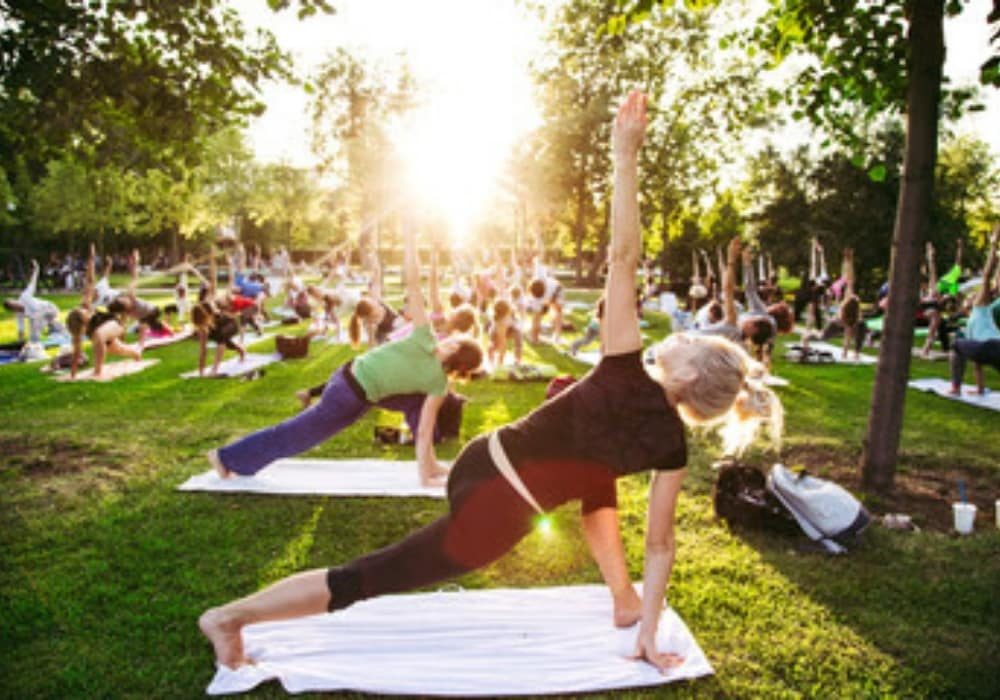
Stepping away from the office, the computer, and constant notifications, even for a few hours, has a value that goes beyond entertainment. Outdoor activities like an eco-gymkhana, or calmer options like a group yoga class, offer the kind of breather that's so hard to find in a normal schedule, and help people return to work with a different kind of energy.
Shared humour and play have a liberating effect that's often underestimated in professional settings, where seriousness is mistakenly equated with professionalism. Activities like a laughter therapy session or a relaxed musical bingo remind teams that shared time at work can also be enjoyable, and that laughing together doesn't take anything away from a shared project's seriousness — it strengthens the bond that sustains it.
Feeling part of something bigger than your own individual task is one of the factors that best protects against burnout. Collaborative activities with a shared purpose, such as a charity challenge on solidarity bikes or a kilo mission aimed at helping those in need, connect people to a purpose that goes beyond the quarter's results, and this kind of experience often leaves a positive emotional mark that lasts long after the day itself.
It's important to be clear on this point: a day of activities, however well designed, doesn't fix a toxic work environment, an unsustainable workload, or any mental health issue that requires professional attention. Presenting team building as the solution to these problems would be both dishonest and counterproductive, because it creates the false impression that enough has already been done when the underlying issues remain untouched. Team building works best as a complement within a broader strategy of caring for the team, not as a substitute for that strategy.
For an activity to genuinely contribute to team wellbeing, it's worth keeping a few simple but important criteria in mind. The first is respecting each person's pace: not everyone needs, or enjoys, the same kind of stimulation, and forcing participation in very intense dynamics can have the opposite of the intended effect. The second is making sure the activity doesn't become an extra source of stress, for example through excessive competitiveness or public exposure that feels uncomfortable for more reserved people.
Asking the team, even informally, how they're feeling and what kind of space they need, usually gets better results than deciding on the activity purely from management or HR. A team going through a heavy workload period might appreciate a calm, relaxing day far more than a demanding physical challenge, while a team with pent-up energy might enjoy exactly the opposite.
Wellbeing isn't built in a single afternoon. The organisations that see the best results in this area tend to be the ones that build in small, regular moments of connection, not just one big annual activity. Combining occasional, more elaborate events with simple, frequent gestures — a shared break, public recognition, an informal space to talk — builds a healthier work environment in a sustained way over time.
Stress is, to some degree, part of almost every work environment. The point isn't so much to eliminate it entirely, which isn't realistic, as to make sure there are spaces and moments that allow it to be released before it builds up into a bigger problem. Moments of shared relaxation serve exactly that function: they offer an outlet that's also experienced in company, which multiplies its restorative effect compared with purely individual strategies. An afternoon devoted to a collective challenge, away from screens and the usual rush, allows the body and mind to slow down in a way that's rarely achieved during a standard working day.
Not every activity relaxes people equally, and this depends a lot on the individuals and on what the team is going through at the time. For some groups, an intense physical challenge is liberating precisely because it channels built-up tension through movement. For others, especially during periods of heavy burnout, a calmer option, like a creative session or a non-competitive food-based activity, fits better with what the team needs at that moment. Asking before deciding, rather than assuming what will land best, keeps the activity from adding pressure instead of relieving it.
It's every organisation's responsibility to know how to tell the difference between everyday burnout, which can be eased with a good work environment and moments of disconnection, and more serious signs that call for the involvement of mental health professionals. No team activity, however well designed, should ever be presented as a response to the latter. Having clear support channels within the company, and managers trained to spot when someone needs more than an afternoon off-screen, is a responsibility that can't be delegated to team building.
Team building, approached with sensitivity, can be a valuable ingredient within a company culture that looks after its people. It doesn't solve everything, and shouldn't try to, but it can bring moments of genuine connection, shared laughter, and mental rest that, added up over time, contribute to a more human and sustainable work environment.
If you'd like to explore activities designed to support your team's wellbeing, you can see all the options available in our team building section, or write to us directly through contact to tell us what your team needs right now.
We design the activity around your company and send a no-obligation quote within 24 hours. Here are some of the most popular:
Team Building
September and October are the ideal time to reconnect your team. Here is why autumn is the best seas…
Read more Team Building
Team building in nature encourages a real digital detox and reduces team stress, thanks to a wide ra…
Read more Team Building
How to design sustainable team building by cutting waste and travel, with activities that build in a…
Read more