 Company Activities
Team Building for Logistics and Warehouse Teams: How to Get It Right
Why warehouse and logistics teams almost never get team building, and which formats really work with…
Read more
Company Activities
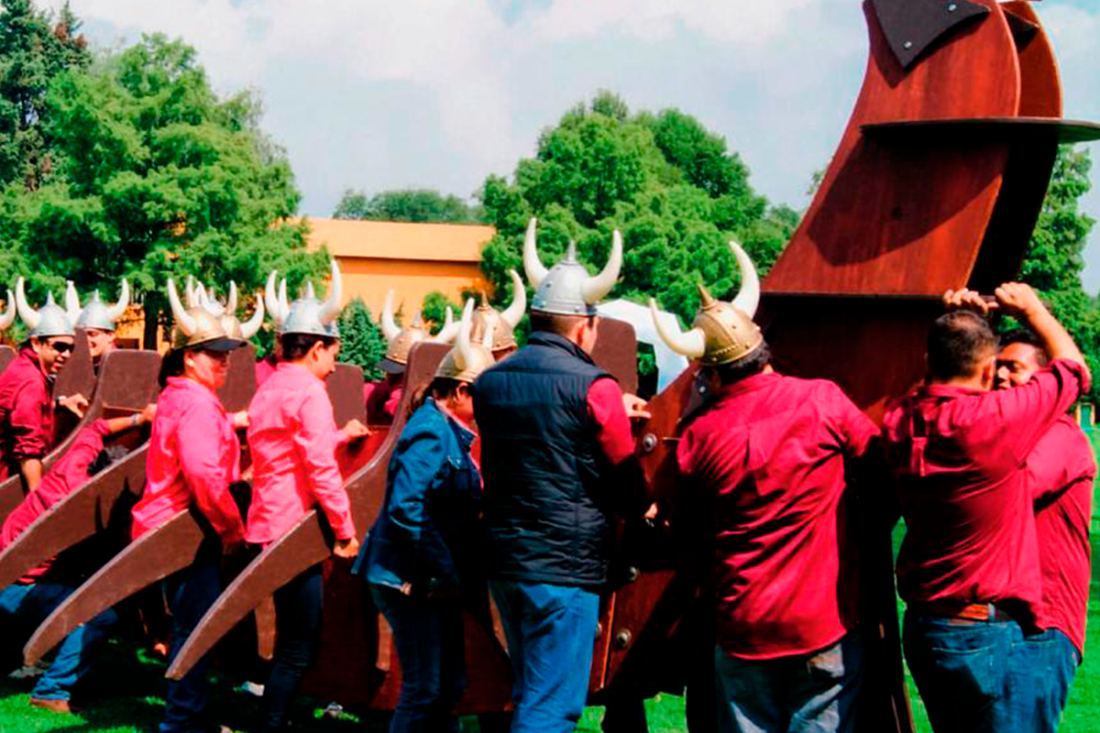
Getting out of the office and taking your team into the open air completely changes the energy of a team building day. Contact with nature, good weather and a sense of adventure help people relax, get more involved and remember the experience far longer than an activity held within four walls. At Kaizen Team Building we've been organising outdoor team building activities across Spain for more than 15 years, and we've seen that being outdoors particularly boosts adventure-based activities, physical challenges and teamwork under pressure. In this article we run through the best outdoor proposals, organised by type of experience, and share a few tips to help the activity go smoothly whatever the weather does.
An outdoor setting strips away much of the hierarchy and routine tied to office spaces: nobody has their own chair or office, which levels out participation across the whole team. Physical movement and fresh air also create a more receptive mood, which helps communication and trust exercises truly sink in for each participant. It's no coincidence that many of our highest-rated team building activities are ones designed to take place outdoors.
Adventure activities are probably the ones that make the best use of an outdoor setting, since they combine moderate physical effort with a strong symbolic weight of teamwork.
Rowing in perfect coordination aboard a Viking-style longboat is one of the most spectacular outdoor activities out there: it demands a perfectly synchronised rhythm among all the rowers, someone to set the pace, and constant communication to stay on course. It's a very visual metaphor for what it means to row in the same direction, and it works just as well for small teams as for large groups split into several crews. You can find the full details of this experience on the Viking Longboat page.
Zip lines, rope bridges, climbing and high ropes courses put trust in the team -and in yourself- to the test. These kinds of activities often produce some of the most memorable moments of any team building day, especially when colleagues cheer each other on to overcome vertigo or whatever physical challenge each section of the course presents.
Making your way through a natural setting with nothing but a map, a compass or a GPS, solving challenges at different points along the route, combines moderate physical exercise with strategy and team decision-making -something particularly useful for departments that need to improve their joint planning and task-delegation skills.
The outdoors is also the perfect setting for activities that work on physical expression and shared group energy -something harder to achieve indoors.
Learning and performing a haka, the Māori ritual dance made famous by rugby, is an emotionally powerful outdoor experience: it demands synchrony, shared energy, and letting go of self-consciousness in front of colleagues. The result is usually a sense of unity and collective strength that's hard to achieve with more conventional activities. Find out how it's organised on the Haka page.
Body-percussion or simple-instrument drumming sessions, held in a circle outdoors, are a very accessible way to build cohesion: no prior musical experience is needed, and the result -a sustained collective rhythm carried by the whole group- always surprises first-timers.
Adapted sport remains one of the go-to resources for outdoor team building, precisely because it can easily be adjusted to different fitness levels within the same team.
Adapting the classic Olympic Games format to a park, a beach or an open field, with team sporting and ingenuity challenges, is one of the most versatile outdoor proposals: it can be adjusted to any number of participants and combines healthy competition with really fun moments, like relay races or precision challenges. Full details are on the Mini-Olympics page.
Combining different low-technical-difficulty sporting challenges along a station-based route lets teams of any fitness level take part without feeling at a disadvantage -something especially important when the workforce spans very different profiles and ages.
Outdoor activities are also a great vehicle for charity-driven initiatives, since open-air spaces make it easy to set up hands-on workshops with tangible results.
Building bicycles outdoors as a team, following technical instructions and coordinating time and tools, to later donate them to a social organisation, combines exercise, improvised mechanics and a very tangible charitable purpose. It's one of the outdoor activities that receives the highest emotional rating from the teams who take part, precisely because the result of their joint effort has a real destination beyond the company itself. You can see the full format on the Charity Bikes page.
Not every outdoor activity has to be wrapped up in a single afternoon. For multi-day conventions or company trips, it's common to combine an intense outdoor activity on the first day -like an adventure route or a sporting challenge- with calmer proposals on later days, such as a cultural or culinary experience that acts as a counterpoint. This combination helps pace the group's physical effort and makes better use of the destination's natural or tourist surroundings, without accumulated fatigue taking away from enjoyment on the trip's final day. Spreading the intensity across several days also makes it easier for people with different fitness levels to take part -something worth bearing in mind the larger and more diverse the group is.
The main challenge with outdoor activities is, naturally, the weather. It's always worth having a covered plan B or an adaptable space, and choosing the time of year based on the type of activity: the most physical proposals work better in mild temperatures, while water or beach activities have their natural moment in the warmer months. It's also important to consider the terrain and access, especially if anyone on the team has reduced mobility, and to work with suppliers who carry insurance and have qualified staff for activities with a stronger physical component. At Kaizen Team Building we organise outdoor team building in Madrid, Barcelona and the rest of Spain, adapting each proposal to each company's setting and available dates.
Spring and autumn tend to be the most forgiving seasons for outdoor team building, with mild temperatures that let participants stay active for several hours without excessive fatigue from heat or cold. In summer, activities that involve water -rowing, beach games, hose circuits or inflatable pools- work best, always scheduled outside the hottest hours of the day with proper sun protection for the whole group. Winter doesn't have to rule out outdoor activities: short, high-intensity activities, like an orienteering scavenger hunt or a brief sporting challenge, work well in cold temperatures as long as warm clothing and hot drinks are provided afterwards. Choosing the right activity for the season matters just as much as choosing the right type of activity, because a proposal that's poorly matched to the weather can completely spoil an experience that, under the right conditions, would have been memorable for the whole team.
There's no single duration that works for every company: it depends on the event's goal, the number of participants, and whether the activity is combined with a lunch, dinner or working day. As a general guideline, adventure or sporting activities usually work well in blocks of two to three hours, enough time to build intensity without physically exhausting the group. Scavenger hunts and orienteering routes can run a bit longer, between three and four hours, especially if they include several stations or challenges spread across a large route. When outdoor team building is part of a multi-day convention, it's common to reserve the main activity for early morning, making the most of milder temperatures and the group's initial energy, and leave the afternoon for less physically demanding activities or for the convention's own work sessions. Getting the duration right avoids both the feeling of it being cut short and the tiredness that can take away from enjoyment during the last part of the day.
The outdoors offers huge scope for designing memorable team building experiences, but getting the activity and the logistics right is what makes the difference between a good team day and a truly transformative one. If you'd like our help choosing and organising the perfect outdoor activity for your company, get in touch with us and we'll put together the best options based on your location, dates and number of participants.
We design the activity around your company and send a no-obligation quote within 24 hours. Here are some of the most popular:
Company Activities
Why warehouse and logistics teams almost never get team building, and which formats really work with…
Read more Company Activities
Why healthcare staff need team building that fits around their shifts, and how to design inclusive, …
Read more Company Activities
Incentives and team building are not the same thing: one rewards individual results, the other stren…
Read more