 Company Activities
Team Building for Logistics and Warehouse Teams: How to Get It Right
Why warehouse and logistics teams almost never get team building, and which formats really work with…
Read more
Company Activities
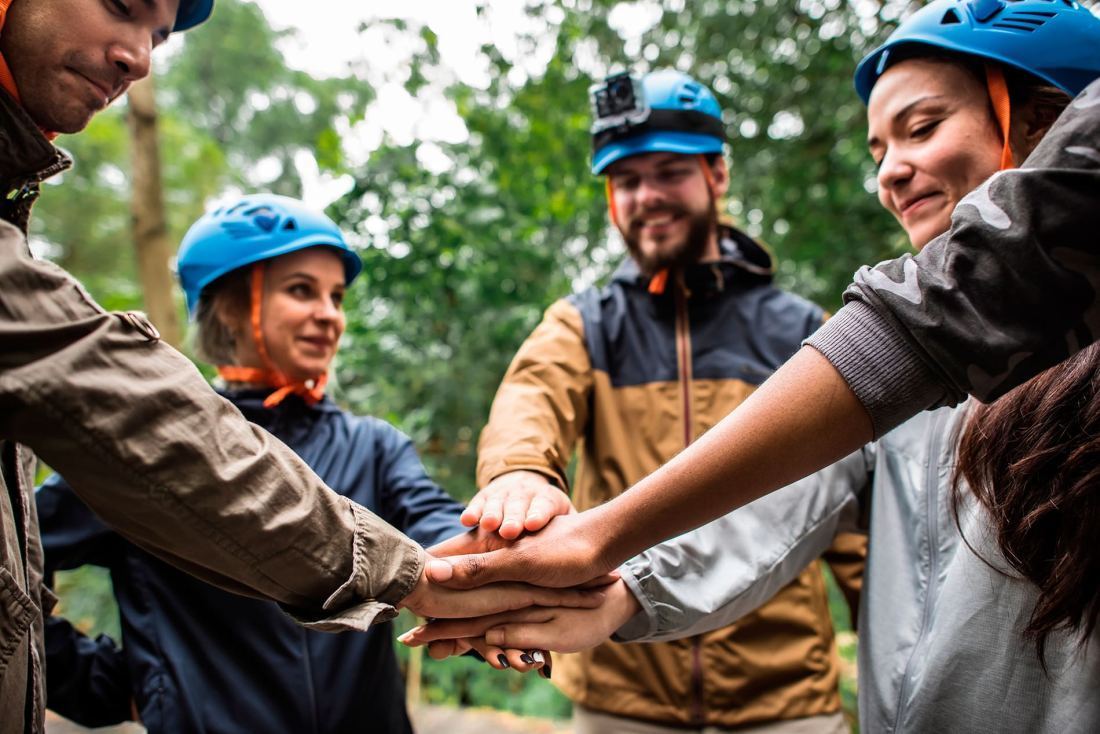
One of a company's greatest assets is its human team. The same company will achieve very different results if its employees are motivated, well organised and bring out their best, compared to ones who find no incentive in their work, with little to no initiative or lack of organisation when facing problems. Improving a human team's skills and attitudes isn't something that happens spontaneously — it needs training. And one of the most effective systems is Outdoor Training.
Outdoor Training, also known as outdoor education or learning "outside the classroom", is training that boosts a company's staff's talent, initiative, creativity, aspirations and motivations, framed within a game or outdoor activity (climbing, caving, gymkhanas, survival, canoeing, etc.).
It shouldn't be confused with Team Building activities or adventure sports, which only aim to get employees having fun together and help build bonds with colleagues through playful team activities. Outdoor Training goes much further: it's an educational method that presents a problem to solve, assessing and boosting logical thinking, cooperation and leadership skills within a team.
Outdoor Training requires customised design specially adapted to each professional team's needs, delivered by highly qualified instructors.
First, information about the group is gathered to adapt the activities to the company's needs. Then the training is split into five steps: experience, share, interpret, extend and apply. The activities combine competitiveness, teamwork, leadership and communication.
It's no coincidence that Outdoor Training originated within the military of the United States and Great Britain after World War II.
Several schools began applying military training strategies to executives and senior company officials with the aim of improving their productivity and boosting their initiative in resolving conflicts. The excellent results and clear benefits meant this new "outside the classroom" educational system spread to all staff, with a noticeable improvement in interpersonal relationships and teamwork also being observed.
It's a scientific fact that we learn 20% of what we hear, 50% of what we see, and 80% of what we do.
Outdoor Training focuses mainly on inductive learning, where you learn by doing and discovering things for yourself. That's why experiential education — what we learn through direct, hands-on experience — is so effective. The conclusions from this learning are instant and lasting.
Thanks to this type of training in an outdoor venue, company employees, placed outside their comfort zone in an unfamiliar environment full of obstacles, awaken their best instincts and improve their skills and abilities. The team strategies applied in this environment will later serve them in their day-to-day work.
The improvements gained through this learning methodology are excellent:
More and more companies and consultancies are adding Outdoor Training to their investment programmes — an educational initiative whose benefits and returns are clear to see. At Kaizen we're Outdoor Training experts — discover how much your business could improve with us.
We design the activity around your company and send a no-obligation quote within 24 hours. Here are some of the most popular:
Company Activities
Why warehouse and logistics teams almost never get team building, and which formats really work with…
Read more Company Activities
Why healthcare staff need team building that fits around their shifts, and how to design inclusive, …
Read more Company Activities
Incentives and team building are not the same thing: one rewards individual results, the other stren…
Read more