 Team Building
Autumn team building: back-to-school activities for your company
September and October are the ideal time to reconnect your team. Here is why autumn is the best seas…
Read more
Team Building
Every new year brings the question of what's going to change in how companies look after their teams, and team building is no exception. After several years in which the sector has evolved at a notable pace, driven by changes in the way we work, by growing awareness of people's wellbeing, and by the arrival of new technology tools, 2026 is shaping up to be a year in which several of these trends fully take hold. At Kaizen, with more than 15 years working with companies across Spain, we see first-hand what type of activities our clients are increasingly asking for and where their priorities are heading. In this article we go over the trends that, in our view, will define team building this year, and why they respond to real business needs rather than just passing fads.
More and more companies are asking for their team event to have, beyond the fun factor, a positive impact that goes beyond their own staff. This translates into growing demand for charitable activities, where the result of the team's work turns into something tangible for a social cause: from building bicycles that are later donated, to activities focused on collecting food or supplies for social organizations, such as our mission kilo proposal, in which the team competes and collaborates at the same time in pursuit of a purpose that goes beyond the event itself. Alongside this, interest is also growing in activities with an environmental sustainability angle, such as dynamics focused on building shelters for wildlife or improving natural spaces, which connect the team with concrete environmental causes. This trend isn't just about corporate image: more and more companies understand that an event with a purpose generates a level of engagement and pride among attendees that's hard to achieve with a purely recreational activity, and that's a factor that carries increasing weight when deciding what type of team building to organize.
Concern for team wellbeing has stopped being an issue exclusive to the HR department and has become a standard criterion when designing corporate events. This translates into growing demand for activities focused on disconnecting from work, stress management and emotional care, as opposed to the more traditional model centered purely on competition or physical challenge. Proposals like a team yoga class or a laughter therapy session fit very well into this trend, combining a moment of group connection with a genuine space for mental rest, something especially valued by teams working under demanding schedules. This priority on wellbeing is also reflected in how other activities are designed: more and more care is taken to make sure dynamics don't create unnecessary pressure, that there's room for each person to take part at whatever level feels comfortable, and that the event as a whole feels like a space of care rather than one more demand added to the work calendar. This trend will likely keep growing as companies build out broader corporate wellbeing policies.
As opposed to the closed-catalog model with a single formula for every group, more and more companies are asking for activities tailored to their team's specific characteristics: its size, its industry, its internal goals and even its corporate culture. This personalization shows up both in the content of the dynamics, adjusting challenges and tasks to fit the reality of the business, and in how event goals are framed, which are increasingly defined in detail before the activity is even chosen. Companies are no longer satisfied with just doing something fun for the team: they want that something to reinforce specific behaviors, whether that's collaboration between departments that don't normally work together, developing future leaders, or integrating new hires. This trend toward personalization also explains why it increasingly makes sense to work with a broad catalog of options, capable of offering more than 50 different activities to choose from and combine, rather than forcing every team to fit into a handful of standard formats. Personalization doesn't always mean creating something from scratch: often it's enough to adapt a proven activity to the specific context of the company experiencing it.
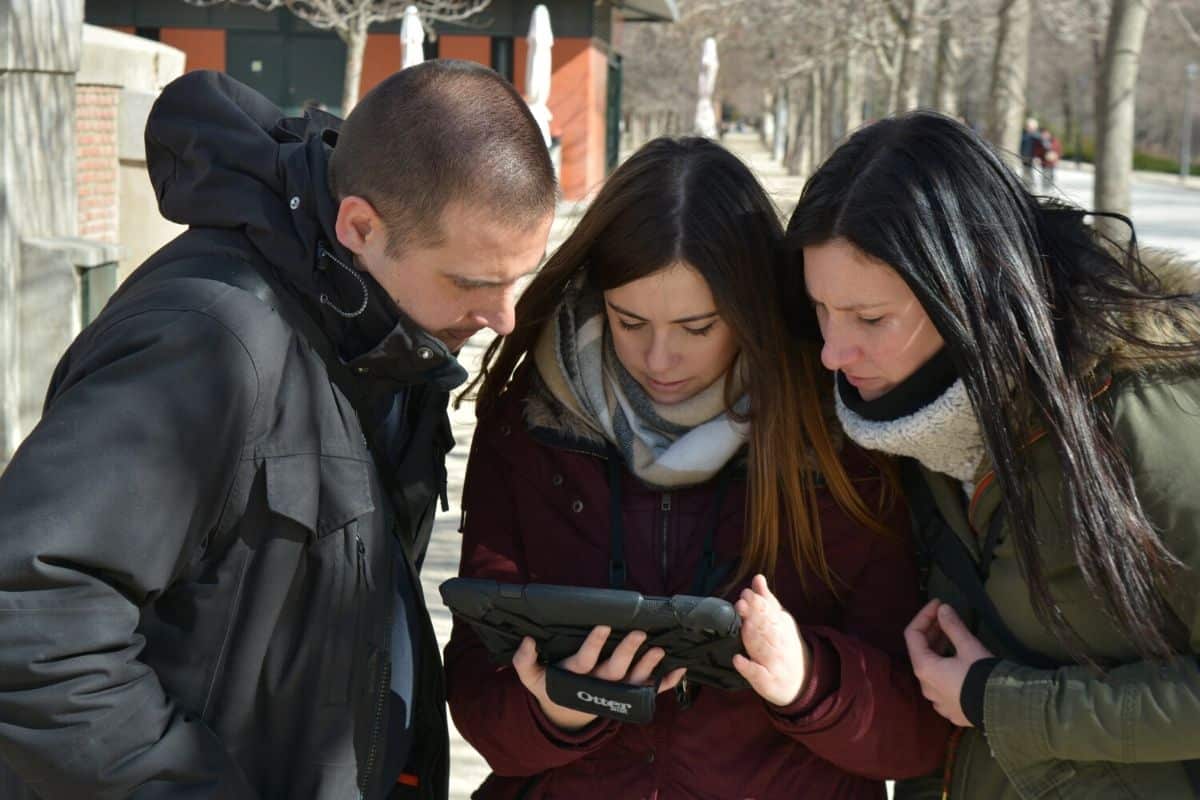
Technology has been part of team building for years, but lately it has become an increasingly central element of many dynamics, rather than a simple add-on. Tablet-guided scavenger hunts, like Cluetivity, or virtual escape room formats, make it possible to combine the traditional physical, group-based side of team building with digital challenges, geolocation, interactive clues or storylines that adapt in real time to the team's decisions. This tech integration brings several advantages: it makes it easier to manage large groups split into several simultaneous teams, it allows objective data to be gathered on how the activity unfolds, and it adds a novelty factor that connects especially well with younger teams or highly digital profiles. It also makes it possible to combine in-person and remote formats, which matters for companies with teams spread across different offices or with part of the staff working remotely, who can take part in the same dynamic from different locations. This trend is likely to keep growing as digital tools become cheaper and easier to build into in-person activities, without that meaning giving up the human, face-to-face element that remains at the core of any team building event.
For a long time, the dominant model was the big annual event: a full day, often out of town, that concentrated a company's entire team building budget and effort for the year. That formula still makes sense in many cases, but more and more companies are combining it with, or replacing it with, shorter formats spread throughout the year, on the understanding that team cohesion is built better through frequent contact than through a single peak of activity. This translates into half-day activities instead of full days, dynamics repeated quarterly instead of once a year, or small events tied to specific team milestones, such as new hires joining, the completion of an important project, or an internal restructuring. This approach also has a practical advantage: it's easier to fit into the schedule of teams with a heavy workload, and it lets companies match the type of activity to whatever the team is going through at any given moment, rather than trying to meet every cohesion need in a single yearly event. This is probably one of the trends that's changing the most in how companies budget and plan their team building activities.
The spread of remote work and teams split across different offices has brought growing demand for team building formats that don't depend on everyone being physically in the same place. This doesn't mean giving up in-person gatherings, which remain irreplaceable for building genuine bonds between people, but combining them with dynamics that let those who can't travel take part anyway, from another location. Scavenger hunts and challenges with digital support are a good example of how several groups can stay connected in real time even when they don't share the same physical space, syncing challenges, scoreboards and results across different sites. This hybrid approach is especially useful for companies with offices in several cities that want a shared team building date without forcing everyone to travel, or for international teams that want to take part in the same dynamic from different countries. It also makes it possible to plan staggered events, in which each site runs its own in-person activity on the same day, keeping a common thread that gives the whole organization a sense of unity even though the event plays out in parallel in different places. This trend is likely to keep growing as the geographic spread of teams becomes a normal way of working, and it requires team building providers to adapt their formats to this new reality without losing the quality of the traditional in-person experience.
None of these trends replaces the others: it's common for companies to combine several of them depending on the moment and the needs of each team, mixing, for example, a charitable activity with a tech-based format, or alternating shorter events with a larger annual gathering. At Kaizen we work every year to expand our catalog of activities and adapt it to where the sector is heading, which has allowed us to work with more than 500 companies across Spain over more than 15 years. If you'd like to design a team building event that responds to your team's priorities in 2026, write to us through contact and we'll help you find the format that best fits where your company is right now.
We design the activity around your company and send a no-obligation quote within 24 hours. Here are some of the most popular:
Team Building
September and October are the ideal time to reconnect your team. Here is why autumn is the best seas…
Read more Team Building
Team building in nature encourages a real digital detox and reduces team stress, thanks to a wide ra…
Read more Team Building
How to design sustainable team building by cutting waste and travel, with activities that build in a…
Read more