 Event
Event
Team Building for the Launch of a New Product or Project
Why starting a launch with a team building activity builds more commitment than an email or a slide-…
Read more
Event
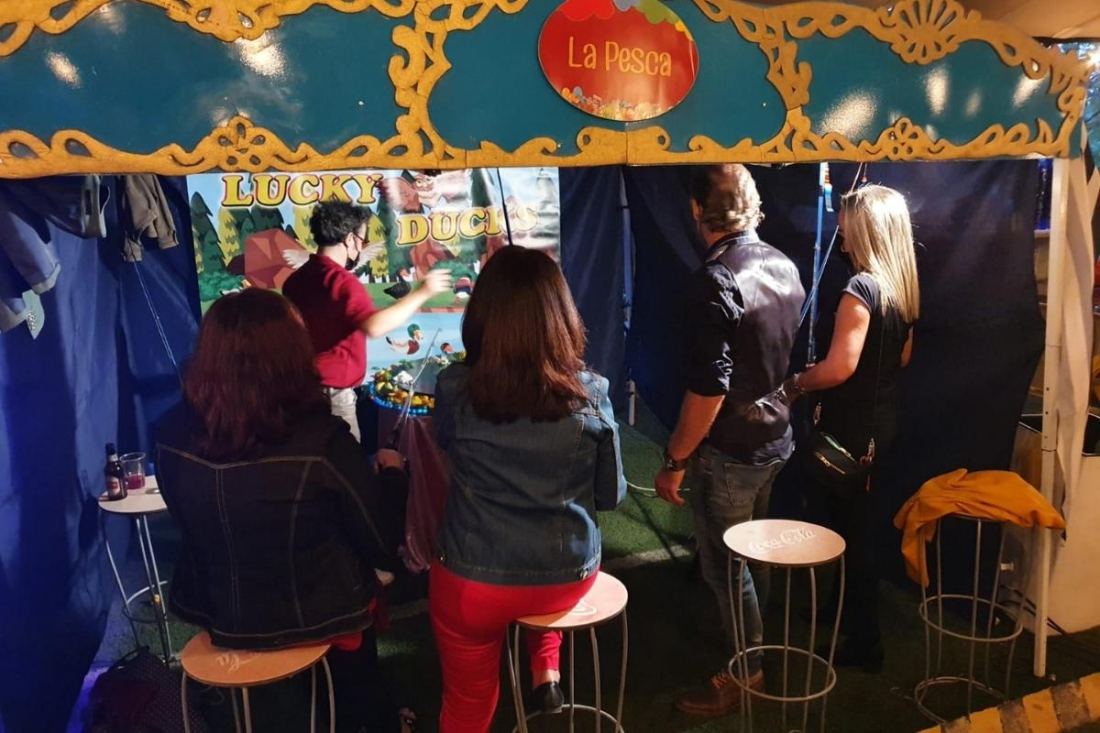
Traditional networking has a problem familiar to anyone who has attended this kind of event: most people stay close to those they already know, drink in hand, without daring to cross the room to introduce themselves to a stranger. B2B networking events are designed precisely to generate contacts between different companies, but initial shyness and the lack of a concrete reason to start a conversation mean a good part of that potential goes untapped. This is where team building dynamics applied to networking events make a real difference: they turn the excuse to talk into a shared activity, rather than leaving it up to each attendee's individual initiative.
A cocktail reception with background music and a table of canapés creates a pleasant atmosphere, but it doesn't solve networking's central problem: how to get two people who don't know each other to start a conversation naturally. Without a shared reason, most attendees tend to gather with colleagues from their own company or their usual circle, and the event ends up generating fewer new contacts than it was meant to.
Being in the same room is not the same as building a professional relationship. Effective networking needs more than physical proximity: it needs a shared experience that leads to a conversation with substance, something to talk about beyond the usual question of what each person does for a living. Well-designed team dynamics offer exactly that, a common ground from which to start building a professional relationship.
When a team building dynamic is introduced into a networking event, the goal shifts in a subtle but decisive way: it is no longer about each person introducing themselves to a stranger, but about a shared challenge that naturally requires collaborating with people from other companies. That collaboration, prompted by the game itself, removes much of the initial awkwardness, because the conversation arises around the activity rather than as an artificial exercise in self-introduction.
The key to making this kind of dynamic work in a B2B networking context lies in the make-up of the teams. Instead of grouping people by the company they come from, it's best to mix them deliberately, so that each team is made up of representatives from different organisations. This simple design decision multiplies the number of new contacts generated during the event, because it forces people to work with others they would otherwise never have exchanged a word with.
Activities like Furor, inspired by TV game show formats, work especially well at networking events because they require no prior familiarity between participants: the rules are easy to grasp instantly, and the fast pace of the game builds rapport quickly among people who have just met, with no need for long explanations or a social warm-up phase.
A tablet-based gymkhana such as Cluetivity is especially useful at networking events with a large number of attendees, because it lets you manage several teams at once across different areas of the venue, with tasks that combine clues, photos and small challenges that require coordinating with new people at each stage of the route. It is a way of creating multiple micro-interactions throughout the day, rather than relying on a single opening conversation.
Dynamics such as Formula GT introduce an element of friendly competition between mixed teams, creating a relaxed atmosphere in which it is much easier to chat afterwards with those who were on your team or on the rival one. When well designed, competition doesn't create tension between companies; quite the opposite: it is the perfect excuse to carry on the conversation once the challenge is over.
After a challenge or competition, closing the event with a lively, festival-style party atmosphere helps consolidate the contacts made during the more structured part of the day. At this point the conversations already have a real starting point: what was experienced during the activity, which makes it much easier to keep talking business naturally, without the pressure of having to start a conversation from scratch.
There is a risk in introducing game dynamics into an event designed to generate professional contacts: the activity itself can take up so much of the spotlight that it ends up replacing the real purpose of the gathering, instead of serving as a tool to achieve it. A challenge that is too long, too competitive or demands total concentration from participants can leave little real room for the business conversation the event was supposed to facilitate. The key is to design dynamics that open the door to conversation, but that don't take up all the available time or demand so much attention that there is no room left to talk business once the challenge is over.
At short networking events, such as a working breakfast or a gathering of a couple of hours, it's best to opt for brief, intense dynamics that act as the initial trigger for conversation, leaving most of the time free for professional exchange. On longer days, such as a full-day conference or an event with several sessions, you can slot in several shorter dynamics throughout the day, making the most of room changes or breaks between talks to create those moments of connection between attendees from different companies.
Not all B2B networking events bring together the same type of professional, and the chosen dynamic must take that profile into account. A meeting of senior executives from industrial companies calls for a different tone and format from a tech start-up event or a gathering of suppliers in a very specific sector. Knowing in advance the profile of the attendees, their level of responsibility within their companies and the usual tone of the sector helps calibrate how informal the activity should be, avoiding both the extreme of a dynamic that is too childish for a very senior audience and that of a proposal too sober for an event with a more relaxed spirit.
For the company or organisation hosting the event, introducing team building dynamics in a B2B networking context directly improves how the event itself is perceived: attendees remember a specific experience, not just one more cocktail reception among the many they have attended throughout the year. For attendees, the benefit is even clearer, as it translates into real professional contacts, made through a shared experience rather than a superficial exchange of business cards.
These dynamics can be adapted to sector networking days as well as trade fairs, conferences or business gatherings of any size. We work with companies and event organisers in different cities, including specific proposals for team building events in Madrid, as well as in Barcelona and other cities where this kind of gathering is regularly held, always adapting the format to the available space and the profile of the participating companies.
Much of the success of these dynamics is decided before the event begins. Sending a short introduction in advance about what attendees are going to experience, without revealing every detail of the challenge, helps build anticipation and reduces the uncomfortable sense of surprise some people may feel at an unexpected activity in a professional setting. It is also worth coordinating in advance with the participating companies on how many people will attend from each, so that the make-up of the mixed teams can be planned precisely rather than improvised on the day of the event.
A good host for the dynamic, with experience managing mixed groups, also makes a notable difference compared with letting the activity unfold without any guidance. The person who presents the challenge, explains the rules and encourages the teams as the activity unfolds plays a role similar to that of a master of ceremonies, able to keep the energy high and step in naturally if a group goes quiet or needs a nudge to join in with more confidence.
At Kaizen Team Building we design dynamics specifically for networking events between companies, built to create real connections between people who don't know each other beforehand. If you are organising an event of this kind and want the contact-building side to really work, you can get in touch with us and we'll help you design the right dynamic for your event.
We design the activity around your company and send a no-obligation quote within 24 hours. Here are some of the most popular:
Event
Why starting a launch with a team building activity builds more commitment than an email or a slide-…
Read more Event
Event
Ideas and tips for celebrating your company anniversary by combining recognition, history and a memo…
Read more Event
Event
A practical guide to choosing and running team building activities that actually work at large-scale…
Read more