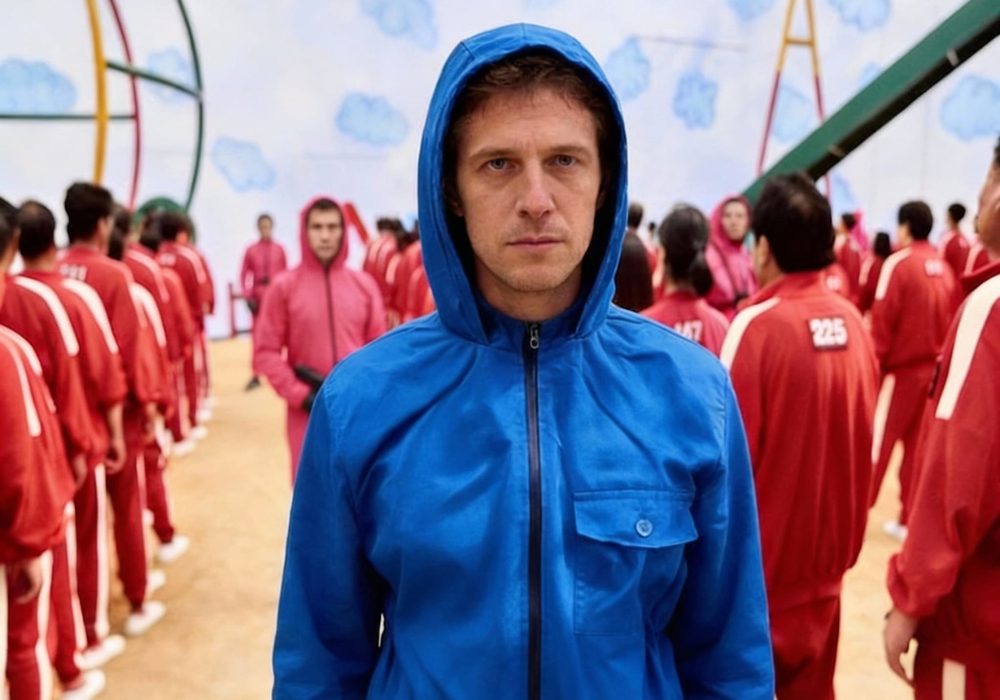
Among the team building activities in highest demand right now, Squad Games stands out because it comes with the appeal of something everyone already knows: the look of a hugely popular streaming series, with actors in costume, challenges against the clock and a scoreboard at stake. The difference is that, in the corporate version, nobody gets eliminated and everything is done as a team.
An activity being eye-catching doesn't mean it is all spectacle. If the challenges are well chosen, each one develops something different: communication without words, strategy, coordination, planning under pressure. In this article we look at how the Kaizen Squad Games works, the challenges it is made up of and what each one develops.
How it works
Participants are split into teams and every team starts with the same scoreboard: 1,000 life points. Each challenge that isn't completed takes a share off that total (for example, 250 points). No player is eliminated during the activity; the team that completes all the challenges with the most points on the scoreboard wins.
The challenges are run by actors dressed as the series' "bad guys", in jumpsuits, masks and with props, fully in character. That theatrical element brings realism, tension and plenty of atmosphere, and frees the group from the feeling of taking part in yet another training exercise.
The activity can be adapted to any size, although, as it is a team activity, it works perfectly well from 10 people.
The challenges, one by one
These are the challenges listed in the activity's information sheet. Depending on the group and the time available, we choose the ones that fit best.
Tempered glass
The team has to cross a grid of tempered glass panels in less than the allotted time. Talking is not allowed: the team has to create a code to communicate, and the person attempting the crossing does so wearing a blindfold. If they don't make it, the next person has a go. What it develops: non-verbal communication, trust in your teammate and a shared system of signals.
Marble aqueduct
Each participant has a length of guttering and the team has a single marble. It has to be transported using only the gutters, there and back, without it falling to the floor. What it develops: fine coordination, a common rhythm and attention to what the person next to you is doing.
Tug of war
Two groups take their places at either end of a rope. The one that pulls the other past the centre line wins. In the words of the information sheet itself, it isn't all about strength: strategy makes the difference. What it develops: collective effort, synchronisation and strategy.
Cookie relay
Each team has to eat as many biscuits as possible in 10 minutes, in a relay race format. The player who is eating can only use their hands to place the biscuit on their forehead; from there, they have to pull faces until the biscuit makes its way into their mouth. What it develops: good humour, slick handovers and losing the fear of looking silly together, which is more useful to a team than it seems.
12 nails
Each team is given a wooden block with a long nail driven in vertically and another 11 nails of the same size. The aim is to balance all 12 nails without touching either the table or the block. What it develops: patience, lateral thinking and working together on a problem that is solved slowly.
Marshmallow challenge
Teams receive 20 sticks of spaghetti, a metre of adhesive tape and a marshmallow. In 18 minutes they have to build the tallest tower, with the marshmallow on top, and the tower must stand up by itself for at least a minute before it is measured. What it develops: planning under pressure, trial and error, and the temptation to spend too much time on the plan and too little on testing it.
Egg challenge
Using the materials provided by Kaizen (string, plastic bags, straws, adhesive tape, lolly sticks, paper tissues...), participants have to protect an egg that will be dropped from a considerable height without it breaking. They can only use that material. What it develops: creativity with limited resources and decision-making as a team.
Three in a row
Each team lines up in single file about 10-15 metres from the target. The first three in each line wear coloured bibs and go out one at a time to place them following the rules of noughts and crosses; once one has been placed, the next goes out. The team that gets three in a row wins. What it develops: shared strategy and communication when not everyone can see the whole board.
What is developed together
The skills listed in the information sheet are effort, team spirit, creativity and coordination. In practice, what tends to come to the surface most is:
- Communication under pressure. With the scoreboard at stake and an actor watching, the teams that organise themselves best are usually the ones that listen before they act.
- Division of roles. In each challenge there is someone who leads, someone who executes and someone who contributes ideas; seeing how that division changes from one challenge to the next is fascinating.
- Handling mistakes. As there are no eliminations, failing a challenge costs points but doesn't take anyone out of the game, so the team learns to bounce back.
- Cohesion. The anecdotes, gestures and laughs from the day become a shared code that the team remembers afterwards.
What is included and what you need to provide
The activity includes actors and instructors, costumes and all the materials needed for the challenges. The venue is an extra: it can be held in your own offices, in an outdoor space or in a place of your choice, and we can help you find a suitable one.
When to choose Squad Games
- When the team already knows each other and wants something with more pace than a table-based exercise.
- For events with an element of spectacle, such as conferences, anniversaries or year-end celebrations.
- When you want an activity that gets people talking afterwards, because the challenges give them plenty to talk about.
If you need an activity with a different profile, for example a calmer one or one with a specific training objective, you will find more options in our article on 20 team building ideas for large events, or you can compare it with a race-against-the-clock activity such as Defuse the Bomb. For large groups that prefer open competition, the Mini Olympics are another option.
Frequently asked questions
How many people are needed?
It adapts to any number of participants and, as it is a team activity, it works perfectly well from 10 people.
Does anyone get eliminated?
No. No player is eliminated during the activity. The team that completes all the challenges with the most points on the scoreboard wins.
What is included?
Actors and instructors, costumes and the materials needed for the challenges. The venue is an extra.
Can it be done in an office?
It depends on the space and the challenges chosen. Tell us where it would be held and we will tell you which format fits.
In summary
Squad Games works because it combines two things that rarely go together: the appeal of a familiar format and challenges that, when well chosen, push the team to communicate, divide up roles and handle mistakes. If you would like us to help you tailor it to your numbers, space and date, tell us what you need and we will suggest options.

 Company Activities


