 Leadership Management
Team building and occupational health and safety: cohesion as a boost to your safety culture
How trust and communication between colleagues, built through team building, strengthen your risk pr…
Read more
Leadership Management
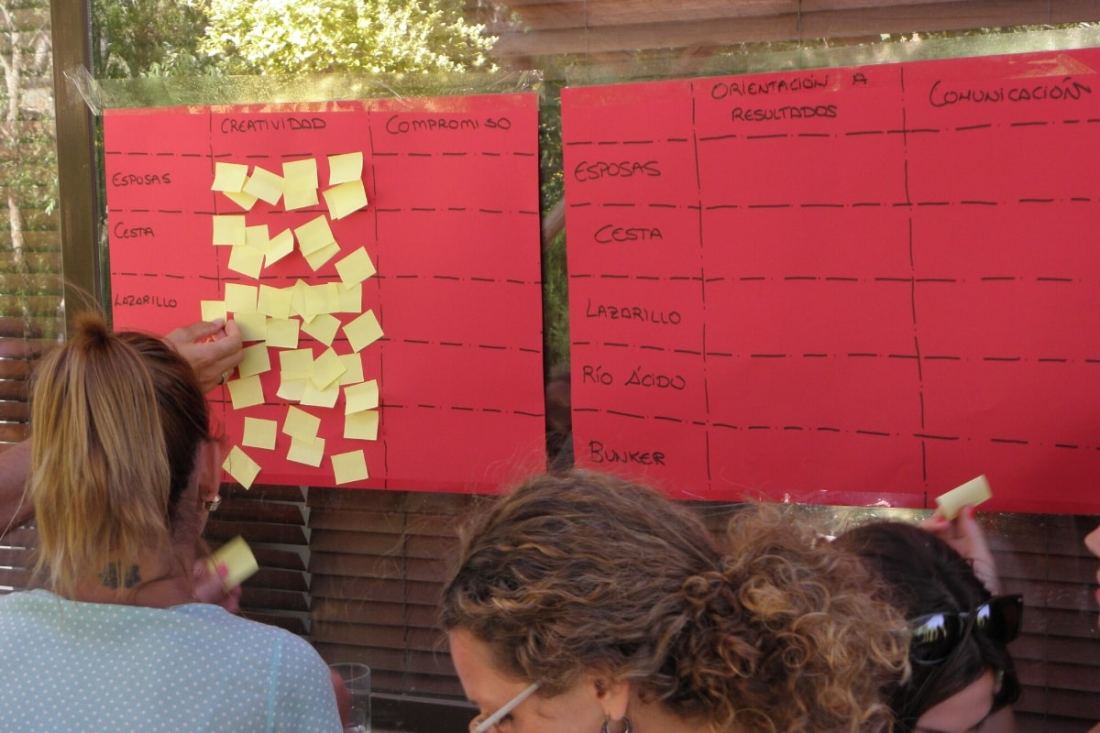
In many organizations, team building starts life as a one-off decision: someone in management suggests celebrating a good quarter, a team lead wants to lift morale after a tough project, or summer simply rolls around and it's time to organize "something." The result is a string of disconnected events with no common thread, dependent on whatever enthusiasm the person driving them that year happens to have. When team building is run this way, it rarely survives a change of manager, a budget cut, or a difficult year. The alternative is for HR to own it as a strategic line of its own, with objectives, continuity and measurement, just as it would with any other talent-retention lever.
The difference between the two approaches isn't budget — it's intent. Ad-hoc team building gets organized because it's "that time again" or because someone asked for it, with no clear connection to any organizational objective beyond having a good time. Strategic team building, by contrast, starts from a diagnosis: what does this particular team need right now, what culture or cohesion issue is being addressed, and how will success be measured. The first leaves a nice one-off memory. The second builds, activity after activity, a coherent internal culture that holds up over time.
When HR leads this strategy, team building stops being a discretionary expense that vanishes with the first budget squeeze and becomes part of the annual people plan, treated with the same seriousness as training, onboarding or performance reviews. This doesn't mean losing spontaneity or turning every activity into a cold corporate exercise — it means that behind every event there's a reason why, and that reason is tied to the organization's real objectives.
One of the biggest challenges any HR department faces today is holding onto the talent it already has, not just attracting new talent. Hiring is expensive and slow, and losing someone who's already trained and settled into the team costs far more than the salary they were being paid. The reasons someone decides to stay at a company are rarely purely financial: the bond with the team, the sense of belonging and the working atmosphere weigh as much as, or more than, the paycheque when deciding whether it's worth staying or looking elsewhere.
Team building, run continuously rather than as an isolated event, is one of the few tools HR has to work directly on that bond. It doesn't replace a good pay policy or a clear career path, but it complements both by reinforcing something no pay rise can achieve on its own: the feeling of belonging to a team that knows each other, supports each other, and enjoys working together.
Companies usually define their culture in documents, corporate values and onboarding handbooks. But an organization's real culture is felt in the concrete moments the team actually lives through, not in what's written down. A well-designed team building activity is, in practice, a living demonstration of those values: if a company claims to champion sustainability, an activity like building solidarity bikes proves it tangibly. If a company claims to foster innovation and creative thinking, a Lego Serious Play session puts that into practice quite literally. HR is in the ideal position to make sure there's coherence between what the company says it is and what it actually gives its teams to experience.
When responsibility falls clearly on HR, several things start working differently:
One area where an HR-led team building strategy makes the biggest difference is in bringing new people onto the team. The first few months in a new role are decisive in whether someone decides to stay or look elsewhere, and the bond with the team forms far faster through a shared activity than through weeks of formal meetings. Building a team building activity into the onboarding process systematically — rather than leaving it to whoever happens to join around the time of the annual event — is one of the highest-return decisions a people department can make.
The first step isn't organizing a big event — it's carrying out an honest diagnosis of where things currently stand: what's been done so far, what's worked, what's been dropped and why. From there, it's worth setting two or three concrete objectives for the year —improving cohesion between two departments that work in isolation from each other, strengthening the integration of new hires, supporting an organizational change process— and building an activity calendar that responds specifically to those objectives, rather than choosing activities just because they look appealing on the surface.
Working with a specialist provider who understands this strategic logic, rather than one that just sells individual activities, makes this job much easier. You can browse the full catalogue of available team building activities or check the FAQs to better understand how each format fits into an annual strategy. And if your HR department wants to design a tailored plan instead of organizing one-off events, the most effective step is to speak directly with a specialist team who can support that process from the initial diagnosis right through to measuring results.
One of the most common obstacles HR runs into when trying to establish team building as a strategy is justifying the investment to leadership or finance, especially in times of budget tightening. The strongest argument isn't an abstract appeal to team satisfaction, but connecting the investment to indicators leadership is already tracking closely: the cost of replacing someone who leaves, how long it takes a new hire to become fully productive, or the impact a poor working atmosphere has on overall team productivity. Presenting team building as an investment that reduces those costs, rather than as a social expense, completely changes the conversation with leadership.
Even when the budget is secured, many team building strategies fail from a lack of continuity in approach, not a lack of funds. Every manager who passes through the people department tends to stamp their own style on it, changing direction from one year to the next with no evaluation of what worked before. Documenting the rationale, objectives and results of each edition — not just running the event, but recording why that format was chosen and what was learned — lets the strategy survive staff changes within the HR department itself, instead of being reinvented from scratch every year.
Ultimately, leaving team building to chance or to the odd manager's initiative means giving up one of the most powerful tools HR has for building culture and retaining talent. When it's managed with the same strategic seriousness as any other people policy, team building stops being a nice-to-have extra and becomes a genuine business lever.
We design the activity around your company and send a no-obligation quote within 24 hours. Here are some of the most popular:
Leadership Management
How trust and communication between colleagues, built through team building, strengthen your risk pr…
Read more Leadership Management
Team building as an employer branding tool: authentic content for social media and recruitment, and …
Read more Leadership Management
Absenteeism is closely linked to a sense of belonging. Find out how team building can help strengthe…
Read more