 Event
Musical Bingo for Companies: How It Works and When to Choose It as Team Building
What musical bingo for companies is, how it is played in teams, what it brings to the group and whic…
Read more
Event
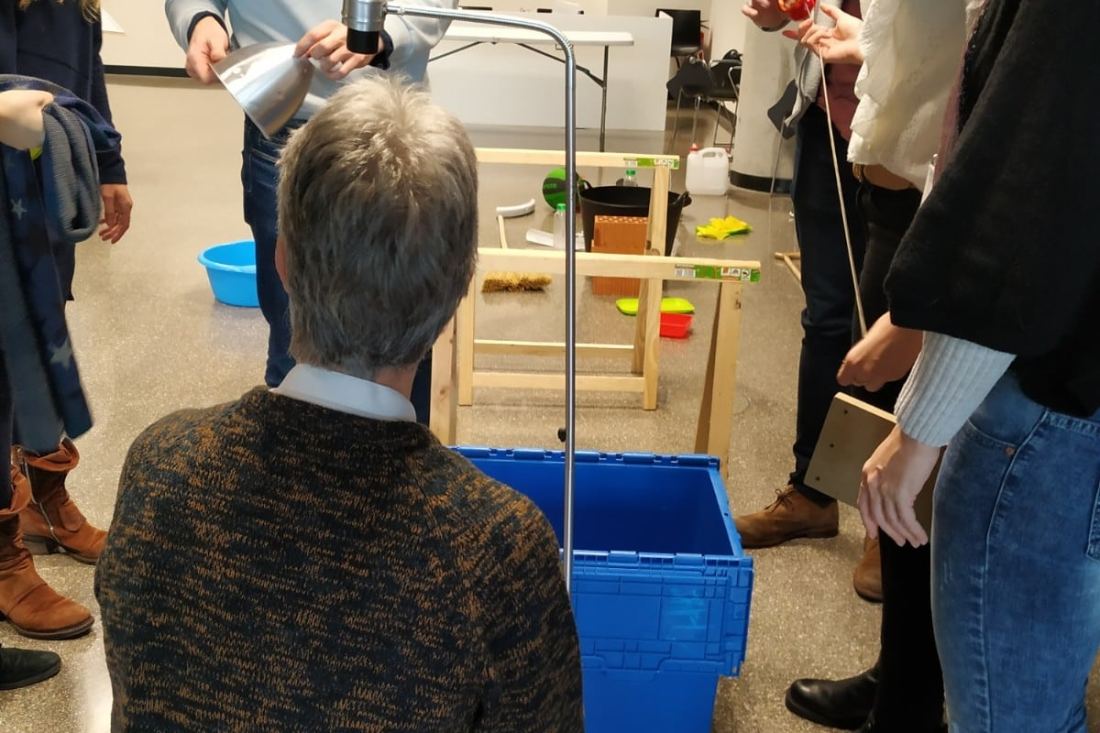
The most common way to announce a new product or an important project internally has stayed the same for decades: an email with the subject line in capitals, or an all-hands meeting with a slide presentation where management explains the objectives, the timeline and the expected figures. This information is necessary, but as an emotional starting point it is rather poor. The team receives data, not a reason to genuinely get involved.
The moment a product launches or a big project kicks off is, in fact, one of the few moments of the year when everyone involved shares the same starting point: nobody has lived the project yet, and everyone is still in time to get on board with energy. Wasting that moment on purely informative communication means giving up something that will be much harder to recover later, in the thick of the project, when difficulties appear: the feeling that everyone is rowing in the same direction by choice, not out of obligation.
Hearing that this project is going to demand a lot from everyone is not the same as living through, even in a playful setting, an experience that demands coordination, effort and collective perseverance right before you start. What we have lived is remembered better than what we have heard, and a well-designed activity leaves a physical and emotional impression tied to the start of the project that no presentation can replicate.
Product launches and big projects almost always cut across departments: product, marketing, sales, customer service, operations, technology. Many of these people have not worked together before and, in the normal routine, would take weeks to build the minimum trust needed to collaborate smoothly. A well-planned team building day compresses that getting-to-know-you process into a few hours.
One of the least discussed functions of team building ahead of a launch is purely psychological: it lets the team make mistakes, laugh about them and learn to correct course together in a setting with no real consequences, just before facing a project where mistakes do matter. That dress rehearsal, even if symbolic, reduces the fear of failing once the project is under way.
Not every activity conveys the right energy for this particular moment. It is worth choosing formats that evoke, even symbolically, what the project is going to require: creativity, speed, coordination or overcoming new challenges.
A Lipdub or a Hollywood-style production, where the team films and stars in its own video, works very well as a launch kick-off because it creates a tangible, shareable result that the whole team identifies with: it is common for that video to be reused later in the project's own internal presentation or even in the launch's external communications.
Activities such as Defuse the Bomb, a virtual escape room or a gymkhana with team challenges convey very well the idea of a team facing something new, against the clock, that only reaches its goal if it coordinates well. In a way, it is a symbolic rehearsal of what getting the project off the ground will involve.
When the goal is to generate visible, contagious enthusiasm, high-energy formats such as a Formula GT race or a mini Olympics work as a collective shot of adrenaline that symbolically marks the start of a new stage, especially if they are combined with a moment for the official presentation of the project built into the day itself.
A formula that works well is to start straight away with the activity, without long speeches beforehand, and leave the formal presentation of the project for later, when the group has already shared an experience and is more receptive. Presenting the project first and rewarding people with the activity afterwards sends a different message, closer to the traditional work-then-reward pattern, which is precisely what you want to avoid.
It is important that the people who will lead the project or the launch take part in the activity like everyone else, and do not just turn up at the end to give the official speech. Seeing them involved, competing, making mistakes and celebrating with the rest of the team builds a far more approachable authority than that of someone who only appears for the formal parts of the event.
There is no need to stretch out the formal part. A short, honest message explaining why the project matters and what is expected of the team has much more impact when it comes after a shared experience than when it opens the day. The aim is not to replace the project's formal communication, but to give it an emotional context that helps it land better.
The ideal moment is usually a few days before the official start of the project or the market launch, when there is already enough information to convey what it is about, but the intense work has not yet begun. Organising it too early dilutes the effect, because the team does not yet see the project as imminent; organising it too late, once execution is under way, turns it into a pause within the work rather than a starting point.
It is also worth thinking about group size. If the project involves a small team, a more intimate and flexible activity makes sense; if the launch involves several departments or even the whole company, large-scale formats with several simultaneous activities allow everyone to feel part of the milestone, even if their direct involvement in the project differs.
Not just anything goes when planning this day. An important launch is the result of months of work by a small group of people, and it is best to avoid the team building activity being seen as detached from that effort, or even as a frivolous distraction just as the tension starts to rise.
Choosing a format that is too childish or too far from the real tone of the project can have the opposite effect to the one intended: scepticism instead of enthusiasm. If the project is a serious bet with real risk for the business, the activity can be fun and light-hearted, but it should keep a certain coherence with the scale of what is being launched. The right energy for the launch of a product line that will change the company's course is not the same as for an informal end-of-year celebration.
It is tempting to use the day's enthusiasm to deliver grandiose messages about what the project will achieve. It is wise to be cautious: the activity should generate energy and unity, not excessive expectations about deadlines, results or recognition that cannot be sustained later. If the initial enthusiasm deflates because the reality of the project, weeks later, does not live up to the speech on day one, the effect on the team's motivation can be worse than if nothing had been organised at all.
In many launches there are people who will have a secondary or support role rather than a front-line one, and who are nonetheless necessary for the project to work. Designing the activity exclusively for the core of the team, leaving out those who will cover support functions, sends a message of hierarchy that can weigh heavily later, when that support turns out to be indispensable.
Unlike other team building activities, here there is a relatively simple way to check whether the day has worked: watch how the project gets going in the days that follow. If the first working meetings start more smoothly than usual, if people from different departments who did not know each other before are already joking with one another or consulting each other directly without going through intermediaries, and if the general atmosphere around the project is one of excitement and not just pressure, the activity has done its job. No formal survey is needed to notice it: you can tell from the tone of the corridor conversations and from how quickly the team starts to move as a cohesive group rather than as a collection of people each working on their own.
Designing a day like this is not about picking the most spectacular activity in the catalogue, but about first understanding what this particular launch or project needs to convey: speed, creativity, perseverance, unity between departments that did not know each other before. From there, the activity becomes a communication tool as powerful as any official presentation, or more so. You can find answers to common questions about organisation on our frequently asked questions page.
If you have a launch or an important project on the horizon and would like us to design together the day that kicks it off with the right energy, write to us and we will plan it to measure.
We design the activity around your company and send a no-obligation quote within 24 hours. Here are some of the most popular:
Event
What musical bingo for companies is, how it is played in teams, what it brings to the group and whic…
Read more Event
How to use team building dynamics at networking events to break the ice between people from differen…
Read more Event
Ideas and tips for celebrating your company anniversary by combining recognition, history and a memo…
Read more