 Team Building
Team Building in Nature: Outdoor Activities for Companies
Team building in nature encourages a real digital detox and reduces team stress, thanks to a wide ra…
Read more
Team Building
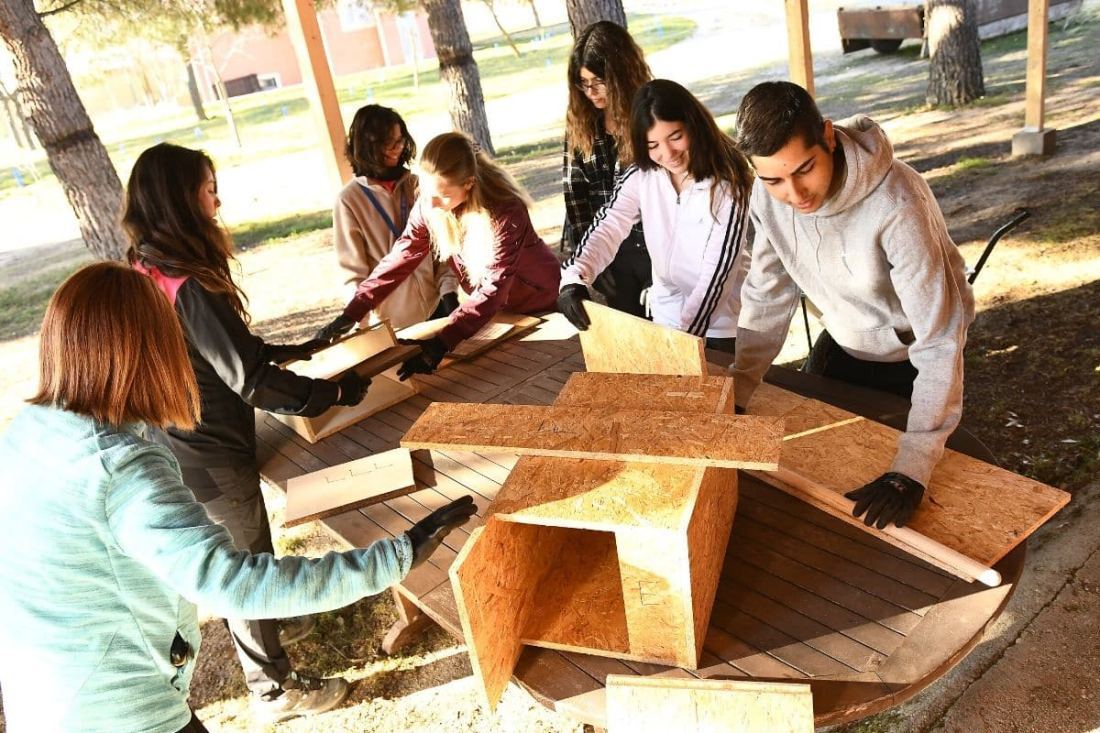
There is a moment each year when companies, almost without realising it, press a kind of collective reset button. It is not the first of January, with its resolutions that rarely survive the first week back at work. It is September. After the summer break, with the holidays digested and the routine not yet fully settled, teams arrive at the office with a different energy: more receptive, more open to doing things differently. That is why autumn team building works particularly well: it taps into a moment when, quite naturally, we are all looking to reconnect.
The Spanish working calendar has, in practice, two big starting points: January and September. But while January tends to come loaded with end-of-year pressure, fiscal closings and a general sense of winter tiredness, September arrives after the summer rest, with teams physically and mentally recovered. It is when plans for the final quarter are presented, when the targets to be closed before year-end are set and, in many cases, when new colleagues who start right after the summer join the company.
All of this makes autumn a very specific window of opportunity: the company has several months of intense work ahead before the Christmas break, and starting them with a cohesive team makes a noticeable difference to how that final stretch of the year is tackled, which is often the most demanding for many sectors.
We all remember that September feeling of buying new supplies, starting a new school year and sensing that a different stage was beginning. That same psychological effect, though less obviously, carries over into the workplace. After the holidays, people come back eager for new projects, keen to meet the colleagues who joined over the summer and ready to leave behind the inertia of the previous six months. Making the most of that mood with a well-designed team activity has far more impact than organising the same activity in February, when the year is already in full swing and it is harder to pull people out of their routine.
Summer, with its staggered holidays, shifts and absences, has a scattering effect on teams that is rarely discussed openly. During July and August it is common for the full team never to be together at any point: some leave, others return, some work remotely from another city. The result, when September comes, is a team that has not met in full for weeks and that literally needs to see each other's faces again.
In addition, summer often coincides with the arrival of new employees who start their time at the company during a period of low general activity, with hardly any colleagues around to share those first days with. Autumn is the perfect chance to put that right: bring the whole team together, formally introduce those who joined over the summer, and recover the sense of being a group that holidays, however good they have been for each individual, always end up blurring at a collective level.
Beyond the emotional side, autumn has some very practical advantages for organising team activities:
This last point is more important than it seems. Team building in December tends to blend with the year-end celebration, and although it also has its value, it serves a different purpose: it is more a reward for the year gone by than an investment in the year ahead. Autumn team building, by contrast, is set up at the start of the stretch, with real room for its effects to show up in the team's day-to-day work.
Autumn, with its still mild weather but without the oppressiveness of summer, makes it possible to combine outdoor activities with indoor options designed for rainy days, which become more frequent as the season goes on.
Options such as an Eco Gymkhana fit this time of year very well: the natural setting in autumn has especially beautiful light and colour, and the mild temperatures allow several hours outdoors without the risks of the middle of July. This type of activity also tends to include an element of sustainability and teamwork that connects well with the "back to basics" spirit many companies look for after the summer.
For teams who want a slightly more physical challenge and some shared personal stretching, a survival course is especially suitable in autumn, when the forest and the mountains offer a much more comfortable setting than in the height of summer.
As the days get shorter, food-based activities take on a bigger role as a team building format. A team Cooking Workshop is a great way to close the afternoon with something tangible: the team cooks, collaborates, deals with small last-minute mishaps and, in the end, sits down to share a table with the result of their own joint effort. Few activities create such an immediate sense of shared achievement.
Another very popular option in autumn is the Masterchef-style paella contest, which adds a competitive, fun element to the culinary experience, ideal for breaking the ice between teams who do not yet know each other well after new colleagues joined over the summer.
Autumn also brings its rainy days, and it is always worth having a backup plan, or simply an activity designed for indoors. Room-based activities, creative workshops or escape-room-style formats are perfect for these days: they do not depend on the weather outside and still deliver the collaboration and switching-off element you look for in any team activity.
One of the most common fears when organising an activity in September or October is that "there is no time", because people are just getting back into their rhythm after the summer. Experience shows it is usually quite the opposite: dedicating a full or half day to reconnecting as a team in the first weeks back speeds up, rather than slows down, the rest of the team's return to full pace, because it resolves in one go many of the informal and catch-up conversations that would otherwise drag on for weeks.
The most practical approach is to set the date well in advance, ideally in July or early August, when there is still room to choose the format and date properly, and to communicate it in good time so that nobody experiences it as a last-minute surprise right after coming back from holiday.
Not every company needs the same format. For small teams, a half-day activity is usually enough to recover the cohesion lost over the summer. For larger companies, with several departments or even multiple offices, autumn is a good time to organise a full-day event that brings everyone together, something much harder to coordinate at other times of year when diaries are busier.
If your company is based in Madrid or the surrounding area, you can check our team building in Madrid proposals directly, where the natural setting of the mountains offers especially attractive options during the autumn months. And if you are still not sure which activity best suits your team, at our team we can help you design the proposal that best fits your situation and your calendar, or you can simply take a look at the full catalogue of activities for inspiration.
Choosing this time of year does not bring automatic advantages across the board. There are some common mistakes worth bearing in mind so that the activity genuinely fulfils its purpose.
Taking these details into account when planning makes the difference between an activity that genuinely strengthens the team and one that stays a pleasant outing with no impact beyond the day of the event itself.
Organising team building in autumn is not only about making the most of the good weather or the back-to-school atmosphere. Above all, it is a strategic decision: laying the foundations of team cohesion just before the most demanding stretch of the year, when last-quarter targets and the year-end rush test any team's ability to work together. Starting that stretch with a reconnected team, rather than one still scattered after the summer, makes a difference you can feel month by month until December.
We design the activity around your company and send a no-obligation quote within 24 hours. Here are some of the most popular:
Team Building
Team building in nature encourages a real digital detox and reduces team stress, thanks to a wide ra…
Read more Team Building
How to design sustainable team building by cutting waste and travel, with activities that build in a…
Read more Team Building
Team building activities designed to train creative thinking and innovation in work, product and R&D…
Read more