 Company Activities
Team Building for Logistics and Warehouse Teams: How to Get It Right
Why warehouse and logistics teams almost never get team building, and which formats really work with…
Read more
Company Activities
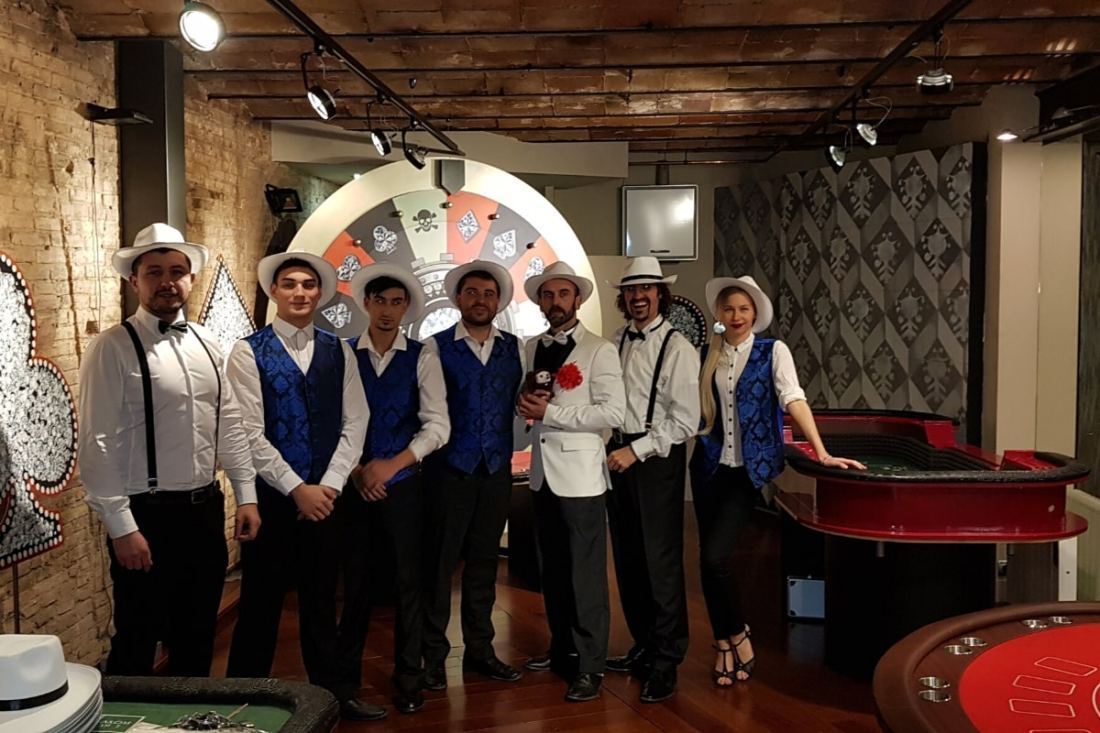
Finance and administration departments often get left out when a company organises team activities. There is a deeply rooted, rarely questioned idea that these profiles prefer to stay away from the more theatrical activities proposed for other departments. The reality is far more nuanced: it is not that these teams do not want to take part, it is that many of the activities offered to them do not fit the way they work, and that creates an initial reluctance which is then wrongly read as a lack of interest in team building in general.
These departments tend to work more quietly than others, with processes that demand precision, order and constant attention to detail. Accounting, treasury, management control, administrative HR and purchasing share a work culture very different from that of sales or creative teams, and that difference also shows in what they consider a good way to spend a team day away from the office.
People who work in finance and administration are usually comfortable with clear structures, defined objectives and processes that can be followed step by step. It is not that they reject fun or surprise; they simply enjoy an activity more when it has a recognisable internal logic, something that can be understood and mastered with attention, rather than relying exclusively on improvisation or public exposure.
One of the reasons these teams turn down certain activities is a very legitimate fear of feeling exposed in activities that reward extroversion or performance. When someone spends their working day focused on figures, reconciliations and internal processes, an activity that forces them to improvise in front of colleagues with no prior structure can cause more discomfort than enjoyment, which is exactly the opposite of what team building is meant to achieve.
Investigation and deduction activities connect naturally with analytical profiles. An activity such as Live Cluedo takes the logic of balancing figures and spotting the data point that does not fit into a narrative, mystery setting. The challenge is solved by working as a team, comparing clues and ruling out hypotheses, which is very close to how these professionals handle an accounting close or an internal audit.
A virtual escape room offers exactly the kind of framework these teams tend to value: a defined objective, a limited time and a series of puzzles solved with method rather than pure improvisation. It demands close collaboration between all team members, but without the pressure of having to perform or expose themselves physically in front of everyone, which makes it a very well-received option for more reserved profiles.
A guided wine tasting combines technical learning with a relaxed pace and easy conversation, two things these teams usually appreciate in particular. Learning to tell aromas, nuances and production processes apart appeals to the analytical curiosity of these profiles, and the seated format encourages informal conversation between colleagues without requiring any kind of performance in front of the group.
A team Cooking Workshop works very well with administrative and finance profiles because it combines technical precision, work in stages and a tangible result at the end of the process. Following a recipe with exact timings and proportions has much more in common with the daily work of these departments than it seems at first glance, and the relaxed atmosphere of a shared kitchen makes conversation easy without forcing anyone into individual exposure.
One aspect that is often neglected when planning activities for these departments is the overall length of the day. While other teams can enjoy an intense experience of several hours without a break, finance and administration profiles usually appreciate a calmer pace, with clearly marked breaks and transition moments between one challenge and the next. It is not that they have less energy, but that their usual way of working prioritises sustained concentration over frantic activity, and bringing that same respect for pace to the team building day noticeably improves the team's experience.
The choice of space has more influence than it seems on how the activity is received. A quiet setting with good natural light and enough room for each team to work without feeling overwhelmed by the noise of other groups suits this profile far better than a crowded venue with high levels of background noise. When the physical environment conveys calm, the team goes into the activity in a much more favourable frame of mind.
Finance and administration departments often have a very marked hierarchy, with heads of area, controllers and finance directors who carry significant weight in the team's day-to-day work. Bringing these profiles into the same activity as the rest of the department, on equal terms for its duration, sends a powerful message about the company's culture. When a finance director puts themselves on the same level as their team during a logic challenge or a guided tasting, the hierarchical distance narrows naturally, with no need for any formal speech about closeness or flat leadership.
It is worth making sure the teams formed during the activity do not simply reproduce the company's organisation chart. Mixing people from different levels and functions within the same game team helps conversation flow more naturally and means contributions are valued for how useful they are in solving the challenge, not for the seniority of the person making them.
How you communicate the activity matters as much as the activity itself. It is worth explaining in advance what the challenge involves and what is expected of each person, and above all making it clear that there will be no moment of forced exposure in front of the whole company. When these teams understand beforehand the structure and the level of participation they will be asked for, their attitude changes radically compared with being presented with the activity as a surprise with no further context.
It also helps a great deal to involve someone from the department itself in choosing the activity. Asking them directly what kind of challenge they would find appealing, rather than deciding solely from HR or management, usually translates into much more enthusiastic participation on the day.
When a company organises team building with only the noisier departments in mind, such as sales or marketing, it unintentionally sends the message that some teams matter less. Investing time in designing a suitable activity for finance and administration is also a way of recognising the often invisible work that keeps the whole organisation running day to day. These teams handle payments, payroll, closings, suppliers and internal processes that are rarely seen, but without which nothing else in the company could function normally.
At Kaizen Team Building we work with companies that want to get it right for every department, adapting the pace, structure and tone of each activity to the real profile of the team that will enjoy it. If you are unsure which activity would suit your finance or administration department best, you can check our team building FAQs or contact us directly and we will help you design the right proposal.
We design the activity around your company and send a no-obligation quote within 24 hours. Here are some of the most popular:
Company Activities
Why warehouse and logistics teams almost never get team building, and which formats really work with…
Read more Company Activities
Why healthcare staff need team building that fits around their shifts, and how to design inclusive, …
Read more Company Activities
Incentives and team building are not the same thing: one rewards individual results, the other stren…
Read more